February 2024 Wisdom Academy

In the Name of God, the Beneficent, the Merciful

Primary Class News

Exploring Practical Life – The Heart of Montessori Education:
In a Montessori classroom, Practical Life activities are at the core of a child’s development. These activities encompass caring for oneself and the environment through purposeful tasks such as pouring water or washing a table. The Practical Life aspects of Montessori Education not only improve fine motor skills but also nurture the child’s abilities of concentration and sense of responsibility within the community…

READ MORE ABOUT PRIMARY 1 HERE


Primary 2 Class News

Practical Life: Repetition of work will allow the children to practice, master, and retain the material. Daily repetition will give much needed practice and reinforcement. Some children are naturally careful observers while other children need more repetition and hands-on practice before they master a particular concept. These practices reinforce to the child how the repetition of activities can help him or her in day to day activities. Practical life activities revolve around strengthening the Fine Motor Skills (pincer grip, pencil grip, and wrist movements) for young children. Most of the materials to conduct these activities are readily available at home. For example: loading and unloading of the dishwasher, folding clothes, dusting, and watering plants.

READ MORE ABOUT PRIMARY 2 HERE


Elementary Class News

One of the greatest misconceptions in the Montessori environment is the need to move away from concrete materials. The presence of concrete materials in the classroom is most likely the initial observation one makes upon entering the environment. From beads to boxes and a myriad of materials in between, it seems unlikely in a world accustomed to abstract learning. But take the bead bars, a set of beads 1-10, color-coded and organized in order. Held in the hand of a child entering the elementary, they are not games but memories.

READ MORE ABOUT ELEMENTARY HERE


Quran Studies News

Students practiced part 1 of Surah Al Mulk المُلك, and practiced Surah Al Jummah to present on the 15th of Sha’bans celebration. They also reviewed old Surahs and learned (reading, writing, and memorized) some Qur’an vocabulary such as basic adjectives and directions … etc.

Our focus for Groups Four and Five is on reading and Qur’an vocabulary memorization, and also on writing; our goal is to help children learn the most efficient way of Arabic writing, and to help them develop a sense of direction of their Arabic writing (which is opposite of the direction of English writing), and develop a sense of the right size of the Arabic written words.

READ MORE ABOUT QURAN STUDIES HERE


In Mathematics, Grade 7 students built on their previous knowledge of inequalities to learn about the basics of solving inequalities in one variable, visualizing their solutions on the number line, and applying this process to solve inequality problems.

In Biology, and after we had studied last month about our patterns of inheritance, Grade 9 was introduced to the research on DNA – our genetic information, its structure and function, from both a historical and scientific perspective.

In English, both classes are continuing our novel units. The 7th graders have nearly completed The Prince and the Pauper by Mark Twain, with a focus on analyzing character, plot, and setting. The 9th grade class has completed A Tale of Two Cities by Charles Dickens, with a focus on theme, motifs, and symbolism and is preparing to write a literary analysis paper over the novel.

READ MORE ABOUT UPPER SCHOOL HERE


Inshaa’Allah

Friday, March 8th, 2024 : Planting with Parents Event

Sunday, March 11th to March 15th, 2024 : Spring Break

Saturday, March 23rd, 2024: Iftar Celebration

No School on Ramadan 19, 21, and 23.


Alhamdulillah! We thank the parents, families, and community for their continuing support and encouragement. If you have any questions, comments, or ideas, we would love to hear from you! Please leave your comments!

February 2024 Upper School (7th and 9th Grade) News

In Mathematics, Grade 7 students built on their previous knowledge of inequalities to learn about the basics of solving inequalities in one variable, visualizing their solutions on the number line, and applying this process to solve inequality problems. They then moved on to Geometry, where they extended their understanding of areas and perimeters to include plane figures like quadrilaterals, circles, and even composite figures. They explored and derived the formulas by themselves through class activities. Students later studied 3D models of Geometric Solids where they calculated their volumes and identified their cross sections, and also practiced drawing their 2D net to provide them a better understanding of the total surface area.

Grade 7 students deriving the area of a circle using the area of the rectangle in an activity.
Grade 7 students solving a Geometry problem as a group.
Grade 7 students exploring the 2D net of a solid to understand its total surface area.
Grade 7 students trying to find the area of a parallelogram and taking measurements.
Grade 7 students calculating the slope of a wooden stick by measuring its rise and run.
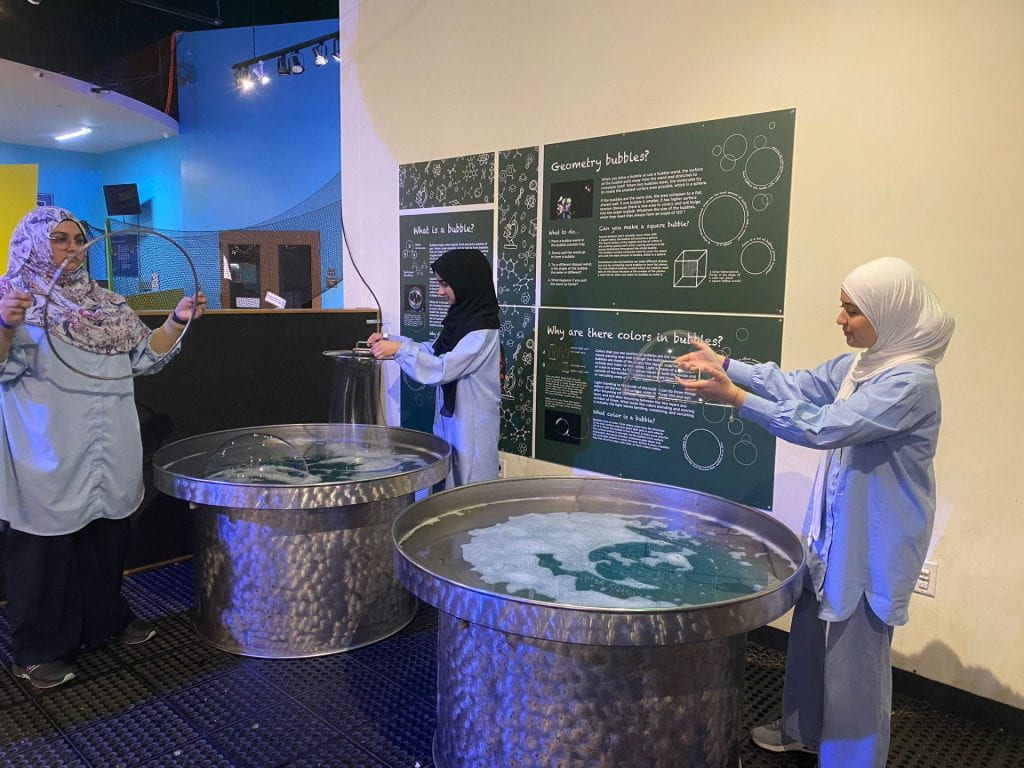
Grade 7 students measuring the diameter of a round bubble table on their field trip to calculate its area.

In Geometry, Grade 9 students used properties of similar triangles and properties of parallel lines and transversals to learn and prove new theorems, and applied these theorems to find lengths in problems. Then they began applying properties of similar right triangles to understand the Pythagorean Theorem, relationships in special right triangles, and trigonometric ratios. Students then extended their understanding of trigonometric ratios to include the Law of Sines and Law of Cosines. Finally, students applied what they have learned to various contextual problems, and they also implemented a Trigonometry STEM Project to find the height of the Science Tech Discovery building on their field trip.

Grade 9 student creating her own Clinometer in a STEM project.
Grade 9 student measuring the distance between herself and the Science-Tech Discovery building.
Grade 9 student measuring the angle of elevation at her line of sight using the Clinometer that she created.
Grade 9 student presenting her project after calculating the height of the Science-Tech Discovery building using Trigonometry.

By Mrs. Malak Charara, Science and Electives Teacher:

In Biology, and after we had studied last month about our patterns of inheritance, our Grade 9 student was introduced to the research on DNA – our genetic information, its structure and function, from both a historical and scientific perspective. We’ve also studied how DNA is copied/replicated before cell division takes place in organisms. RNA, another mesmerizing molecule we need in our lives, was compared to DNA in terms of types, structure, and function. The central dogma of genetics was then investigated to learn how genes are expressed, or in simple words, how the flow of genetic information takes place from our DNA to RNA all the way to protein production. Types of errors happening along the way, the mutations they result in, and their significance were also part of our discussions.

In Science, Grade 7 students explored the phenomena of sedimentary rock, shale, and limestone formation. We grasped the concept of uniformitarianism (present rock layers provide evidence of Earth’s landscapes from the past) and the concept of superposition (the oldest rock layers are at the bottom and the newest layers are at the top).
We started investigating fossils generally and will be learning more about them in the upcoming lessons.

In Elective Nutrition, Grade 7 students moved on to learn about the third category of energy-yielding nutrients – Proteins. We discussed the importance of proteins for growth and maintenance, production of enzymes, hormones, and antibodies. Additionally, regulating many processes in our bodies such as transport of other nutrients, pH levels, fluids, and electrolytes.

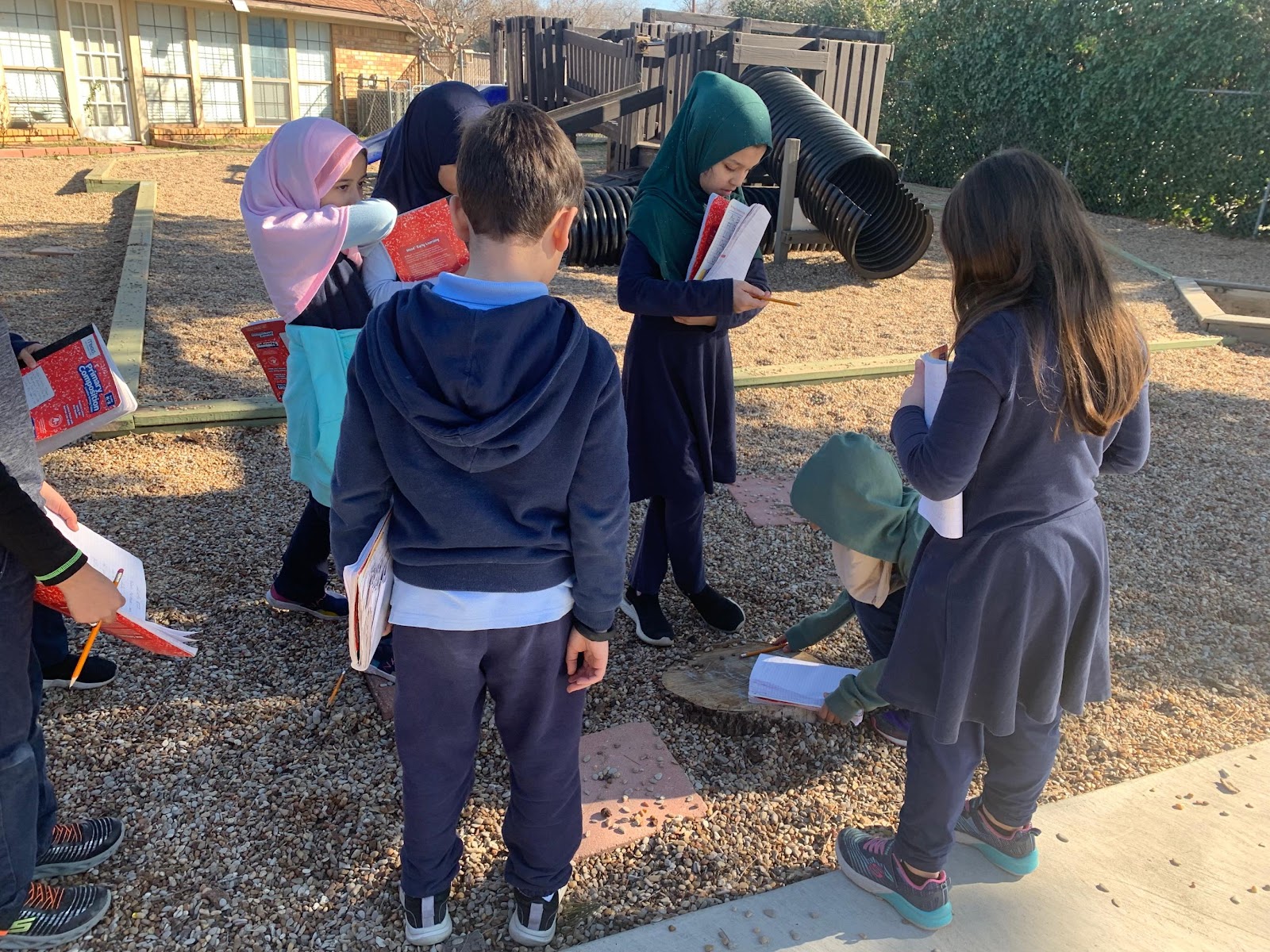
Grade 7 students observing some soil samples they collected 3 different outdoor areas at our school.
Grade 7 students preparing chocolate ice-cream! With the help of the ice-cream maker.

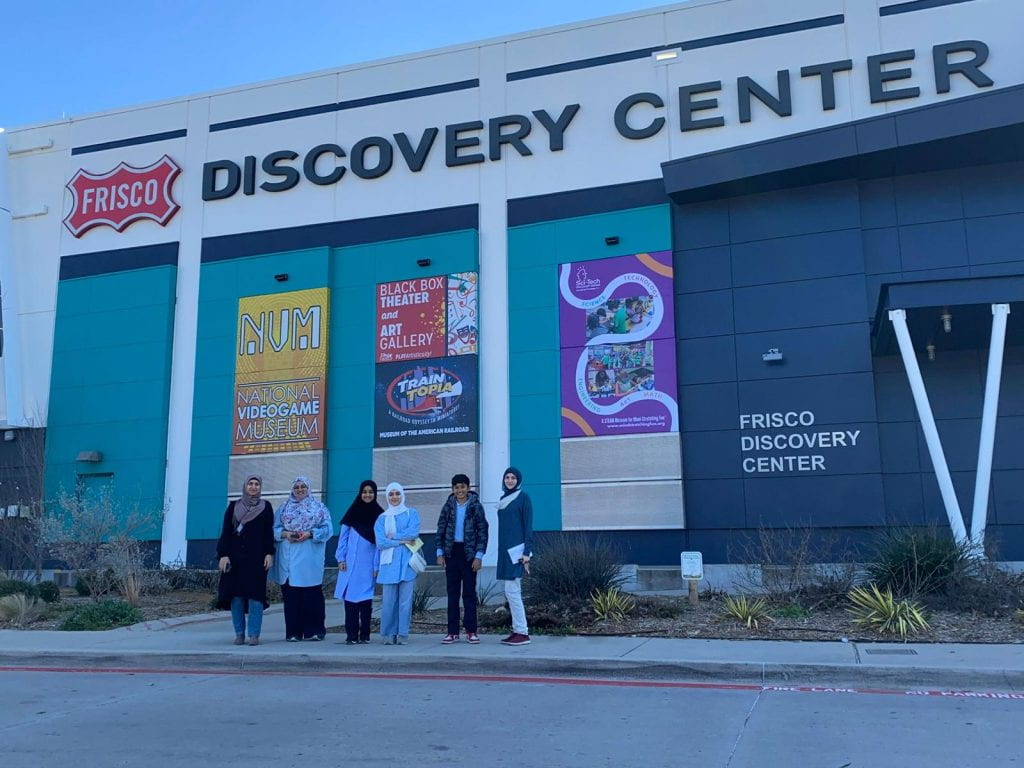
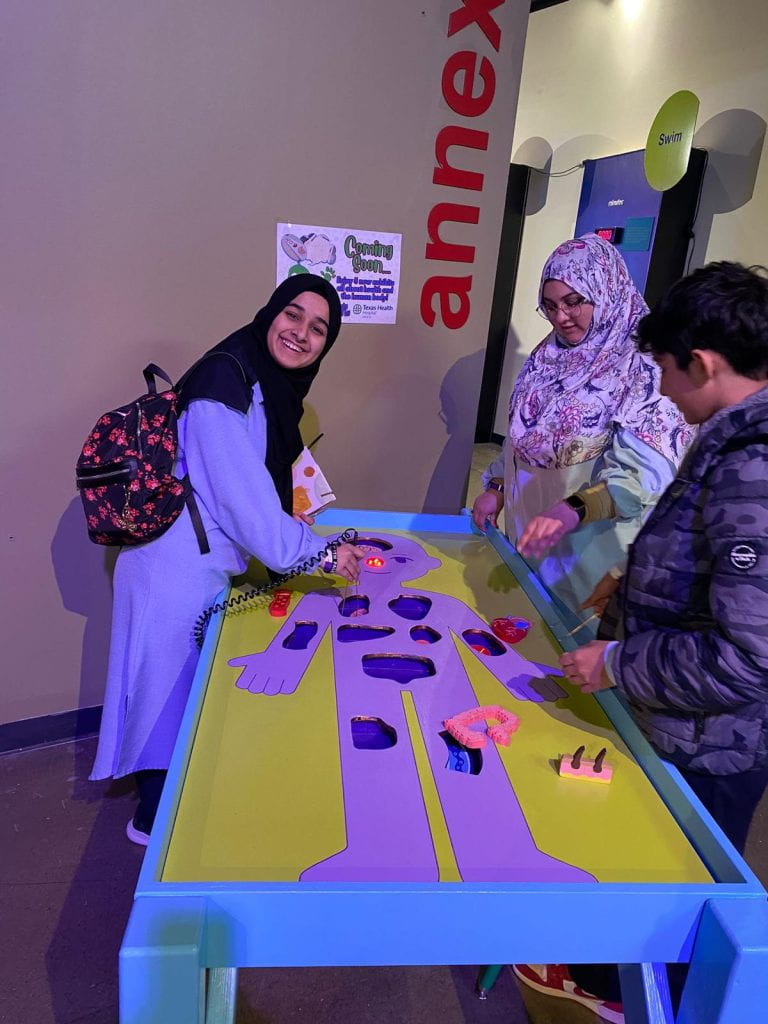
Our Upper school students enjoyed their field trip to the Sci-Tech Discovery Center in Frisco where they explored hands-on learning opportunities which inspire discovery and innovation through the exploration of science, math, and technology. They were able to apply concepts they learned in class to real world settings:


By Br. Yusuf Ali, English, History, and Social Studies Teacher:

In social studies, the 7th graders are studying Medieval Japan, beginning with the rise of the Fujiwara family and the Heian golden age of Japanese culture, and extending through the transition to the feudal military rule of the shogun, daimyos, and samurai. Each student volunteered to study one of the topics in each unit and prepare lessons on their topics, which they will present to the rest of the class.

In the 9th grade world history course, we are completing Unit 4 of the textbook, which is entitled “The Age of Revolutions,” with a detailed lesson on European imperialism during the late 19th century and early 20th century. We have also begun a research project on how the modern-day Muslim world, particularly the Arab regions and Palestine have been shaped by the Western imperialist aspirations and conflicts that caused World War I and II.

In English, both classes are continuing our novel units. The 7th graders have nearly completed The Prince and the Pauper by Mark Twain, with a focus on analyzing character, plot, and setting. The 9th grade class has completed A Tale of Two Cities by Charles Dickens, with a focus on theme, motifs, and symbolism and is preparing to write a literary analysis paper over the novel.

February 2024 Quran Studies News

By Mrs. Fadia Ali, Quran Studies Teacher

Alsalamu Alikum Dear Parents,
We pray that you and your family are well and blessed in this month of Shaban Insha’Allah,
We wish our Imam (aj) and all the Maa’someen Imams whom are born in the month Sha’ban a blessed and a happy birthday Insha’Allah. This is a summary of your children’s Qur’an work during the month of February, 2024.


Primary:

Children practiced Surah Al Qadr القَدر and Surah Al Falaqh الفَلَق, they also reviewed all previous Surahs

Children practiced Surah Al Maa’oon الماعُون and Surah Al Takathur التَكاثُر. They also practiced Nasheed Ya Hujjata Allah to present on the 15th of Sha’bans celebration.


Elementary:
Group One (Level 2 Quran)

Students practiced reading words with all the vowels which they previously learned. They also learned basic Tajweed rules.

Group Two (Level 2 Quran)

Students continued practicing reading of Surah Al Qyamah القِيامة and reviewed old Surahs (Ayah Al Kursi … etc).

Group Three (Level 2 Quran)

Students continued practicing reading of Surah Al Qyamah القِيامة and reviewed old Surahs. They also learned (reading and writing) some Qur’an vocabulary such as body parts 1 & 2.

Our main focus at Level 2 (Groups Two and Three) is on improving student’s recitation of the Noble Quran.
Groups Four and Five (Level 3 Qur’an):

Students practiced part 1 of Surah Al Mulk المُلك, and practiced Surah Al Jummah to present on the 15th of Sha’bans celebration. They also reviewed old Surahs and learned (reading, writing, and memorized) some Qur’an vocabulary such as basic adjectives and directions … etc.

Our focus for Groups Four and Five is on reading and Qur’an vocabulary memorization, and also on writing; our goal is to help children learn the most efficient way of Arabic writing, and to help them develop a sense of direction of their Arabic writing (which is opposite of the direction of English writing), and develop a sense of the right size of the Arabic written words.


Upper School:

7th grade: Students practiced part 1 & 2 of Surah Al Kahff الكَهف (pages 1 to 6), and they memorize and studied Surah Al Qadr القَدر & Surah Al Bayyinah البَيِّنة. They also learned new Hadeeths of the Prophet and Ahlulbayt (as) (Hadeeth; the Friend & Hadeeth the Charity). They also learned new Dua (Salawat Ash-Shabaniyyah).

9th grade: Student learned Chapters 6 (The Anomalies) of the No nonsense Arabic book and practiced reciting many more Surahs of the 29th Juza’ (تَبارك جُزء) of the Noble Quran.

February 2024 Elementary Class News

By Ms. Hind Sabir, Elementary Guide

Salaam Dear Parents, 

I pray this month of celebrations of Sha’ban has been a blessing to you, ان شاء الله .

The year is moving at a great pace and soon the blessed month of taqwa, Shahr Ramadhan, will be upon us,  ان شاء الله.

One of the greatest misconceptions in the Montessori environment is the need to move away from concrete materials. The presence of concrete materials in the classroom is most likely the initial observation one makes upon entering the environment. From beads to boxes and a myriad of materials in between, it seems unlikely in a world accustomed to abstract learning. But take the bead bars, a set of beads 1-10, color-coded and organized in order. Held in the hand of a child entering the elementary, they are not games but memories. The hand is the extension of the mind. The experience of holding a white, seven bar and adding it to a brown, eight bar creates not only the fact of 15 but a potential memorization of that fact, applied dutifully to the ever-learning mind. Take another example, the material of the Sun & Earth, here the ability to manipulate the positions of the earth in correspondence to the sun is so powerful and intuitive that it enables the child to simply understand not only the beauty and genius of Allah’s system but also the logic behind the science and the retention of knowledge.

The potential of concrete material is to create a foundation of learning that is visual before moving to the abstract, because a visual example is so strong that it remains lodged and supported in the mind great through proofs not only rote memorization. The child, not the adult, makes the decision to move on towards abstraction. The adult is the observer, the guide in creating pathways for this occurrence. However, at times, the movement back to concrete after the abstract does bring in another layer of support and is quite awesome. Take for example, the Wooden Hierarchical Material (pictured below). On the left side you see a child working on the material to gain an understanding of numeration of the base of 10. The joy in this work upon entering the elementary is immense. From the tiny unit cube that fits in the hand of a newborn to the immense million cube that can contain a first-year student, the logic is present and real. It would actually take one million unit cubes to make the million cube. The accuracy exists. The labeling is there for that new child just embarking on the idea of what a million really looks like. 

Now, fast forward to the child that is near the end of their elementary years, working on numbers as they spin mental images in their mind. Now, pause – for that older child does return to the Wooden Hierarchical Material (see the image on the right side). He or she is coming back to visually see the representation of exponents of the base 10. Ten to the sixth power, they think to themselves, well now that’s a one with six zeros, that’s a million. Then they work their way down, ten to the second power, ten to the first power, and finally 10 to the zero power… They eventually realize it is the unit cube. They come away knowing that any number to the power of zero is a unit, one. And they see this visually and remember it long after the lesson is over – all through the manipulation of the concrete, all through their elementary years of 6 -12. 

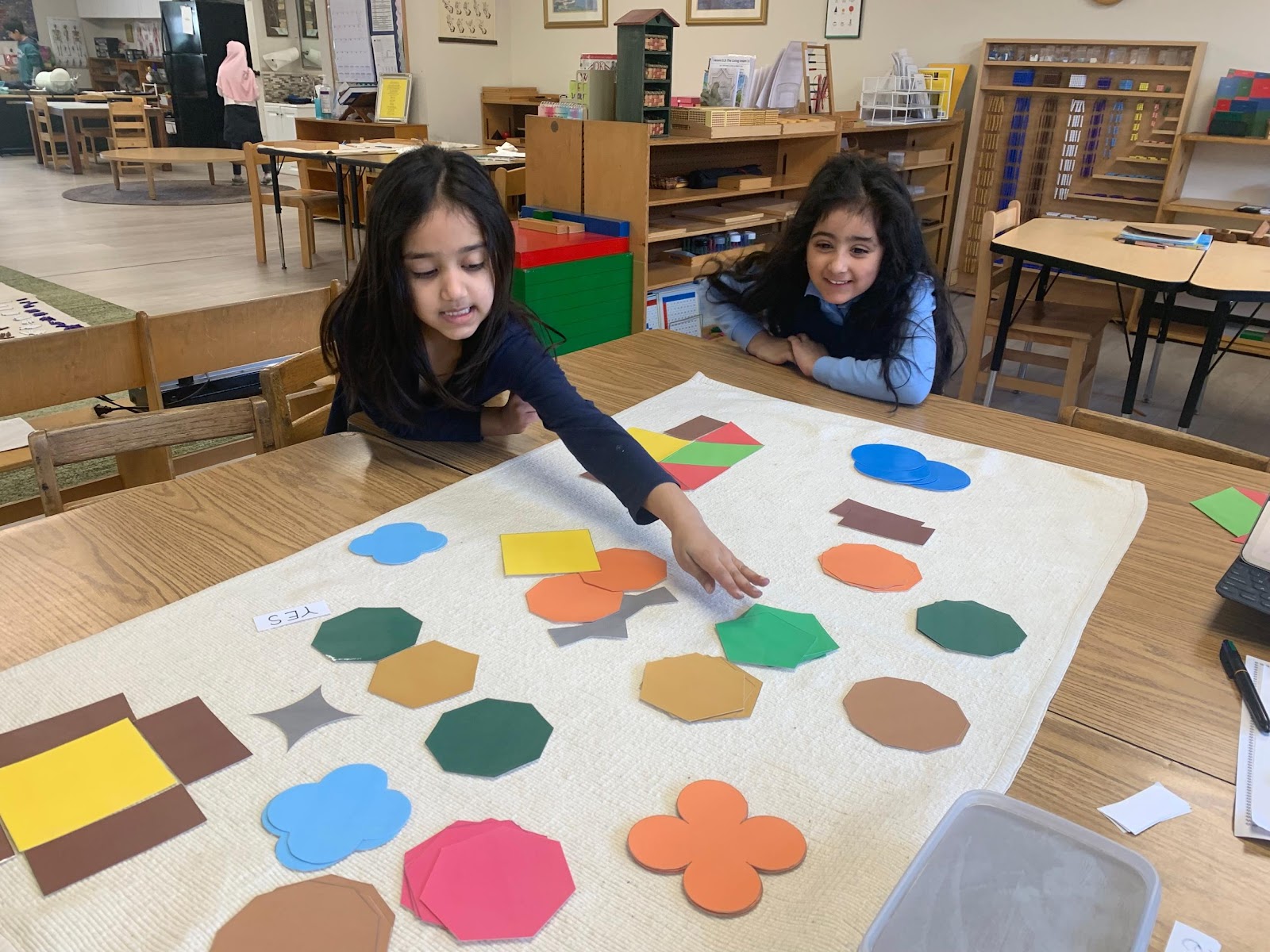
1 Concrete Materials: The Tiling Game Teaches Spatial Awarenss in Geometry

2 Concrete Materials: Adverbs Come Alive

3 Concrete Materials: Extracting the Area of Triangles

4 Concrete Materials: Working with Multiples Leading to the Memorization of Math Facts

5 Concrete Materials: The Cartesian Coordinates on a Life-Size Plane

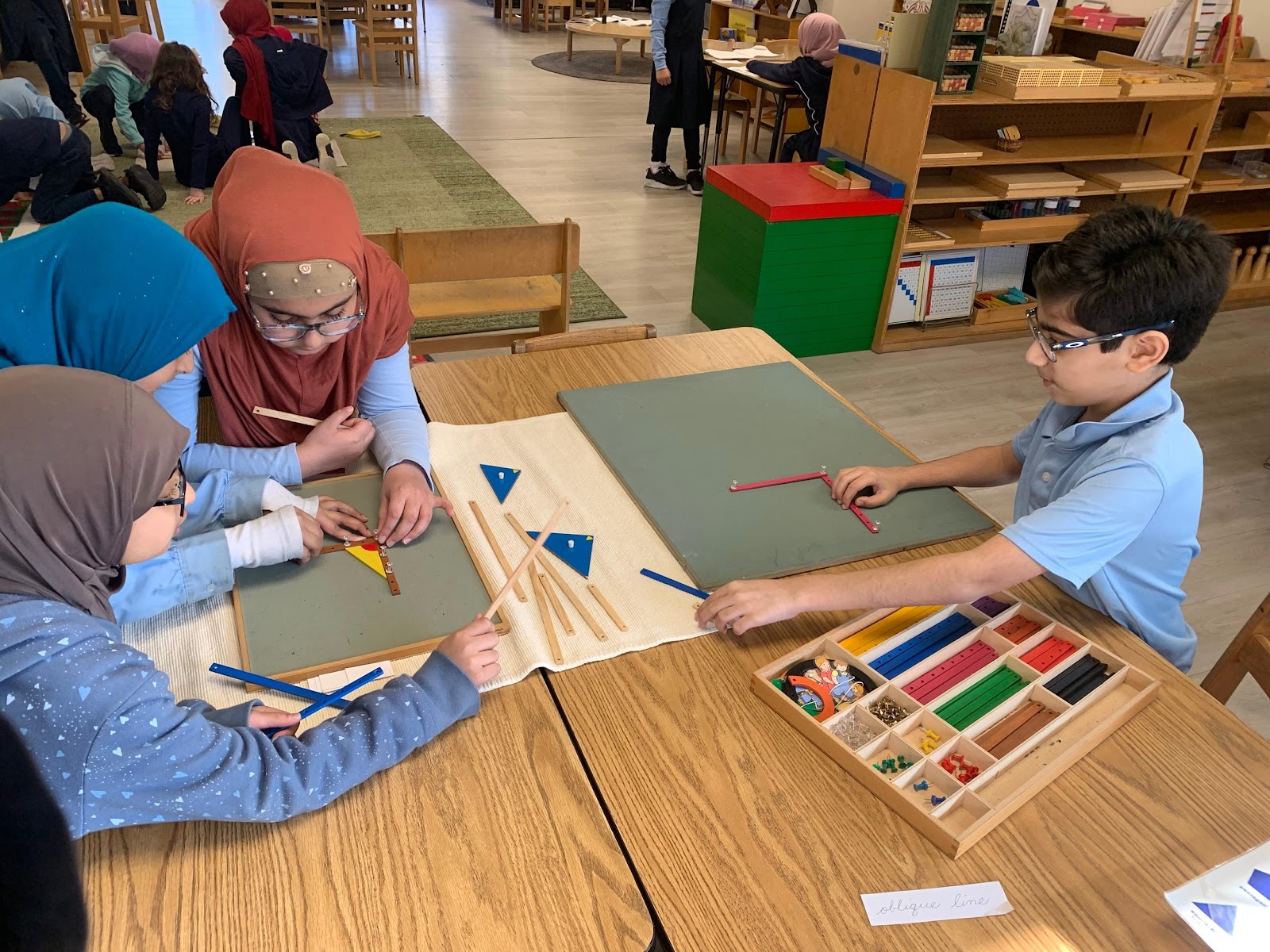
6 Concrete Materials: The Creation of the Right-Angle Triangle Leading us to Pythagoras

Special Events

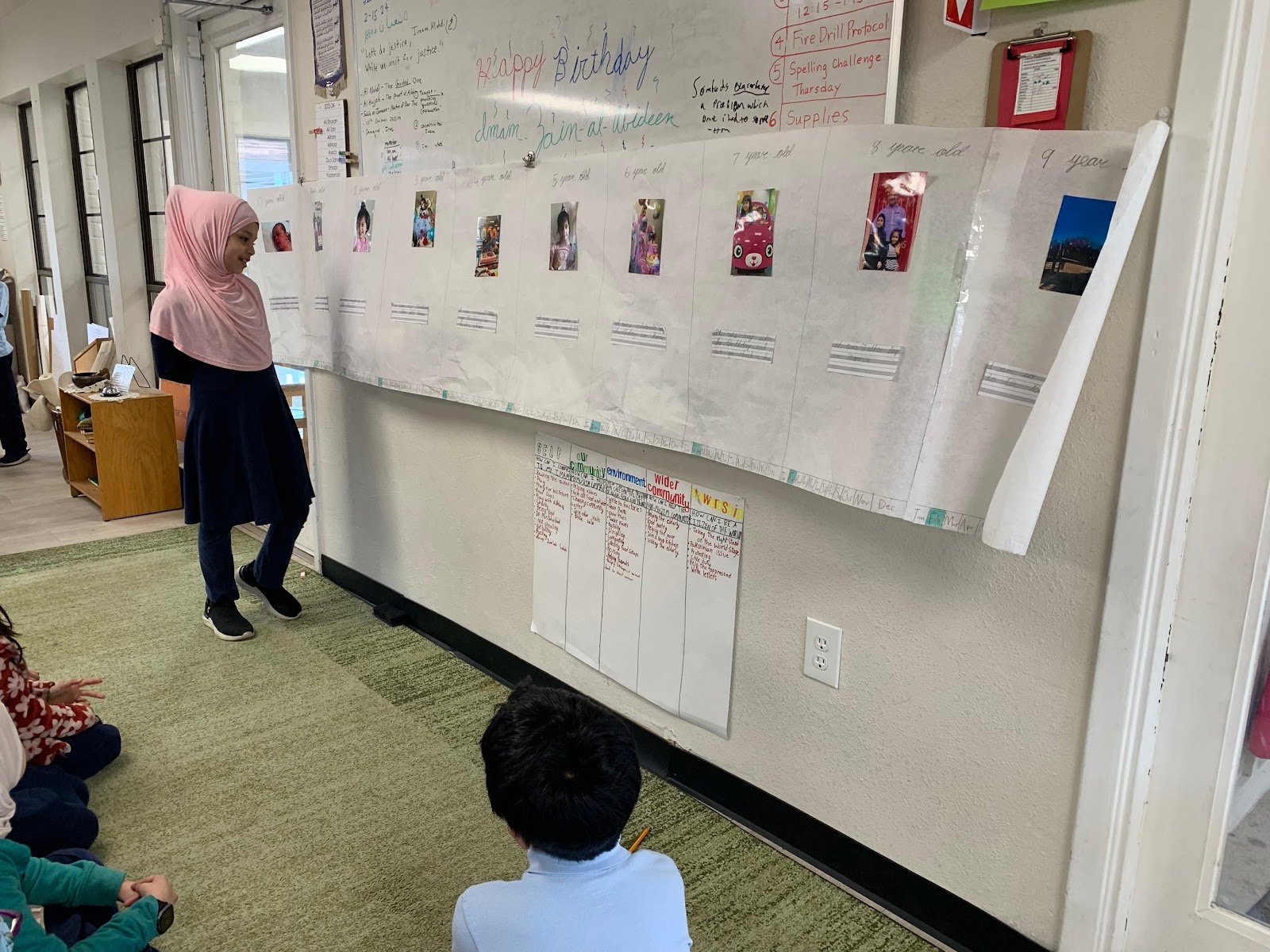
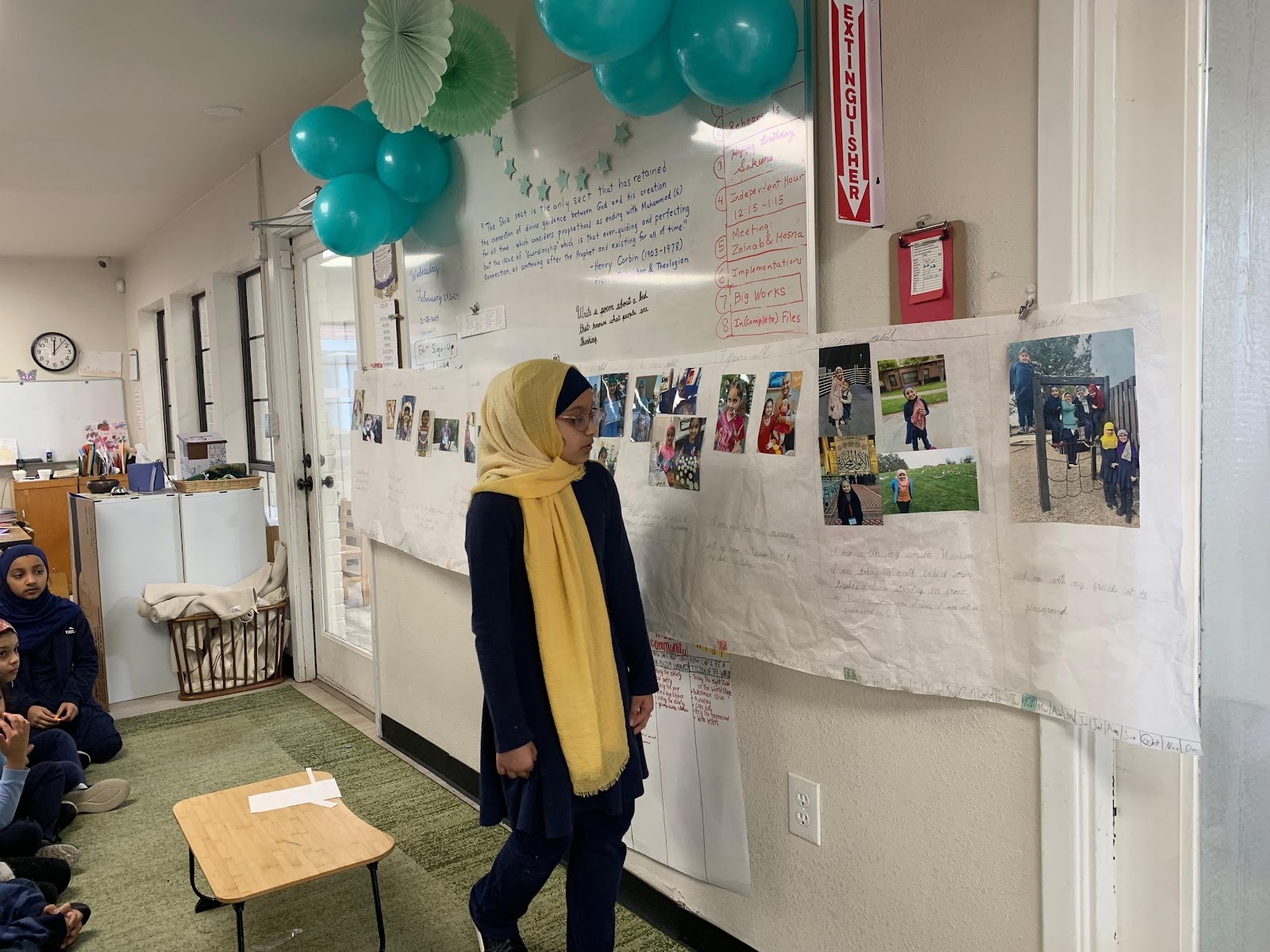
We would like to congratulate Faatemah, AliNaqi, and Sakeena on sharing their Celebrations of Life Timelines with the class. 

7 Celebrating Faatemah

8 Celebrating Sakeena

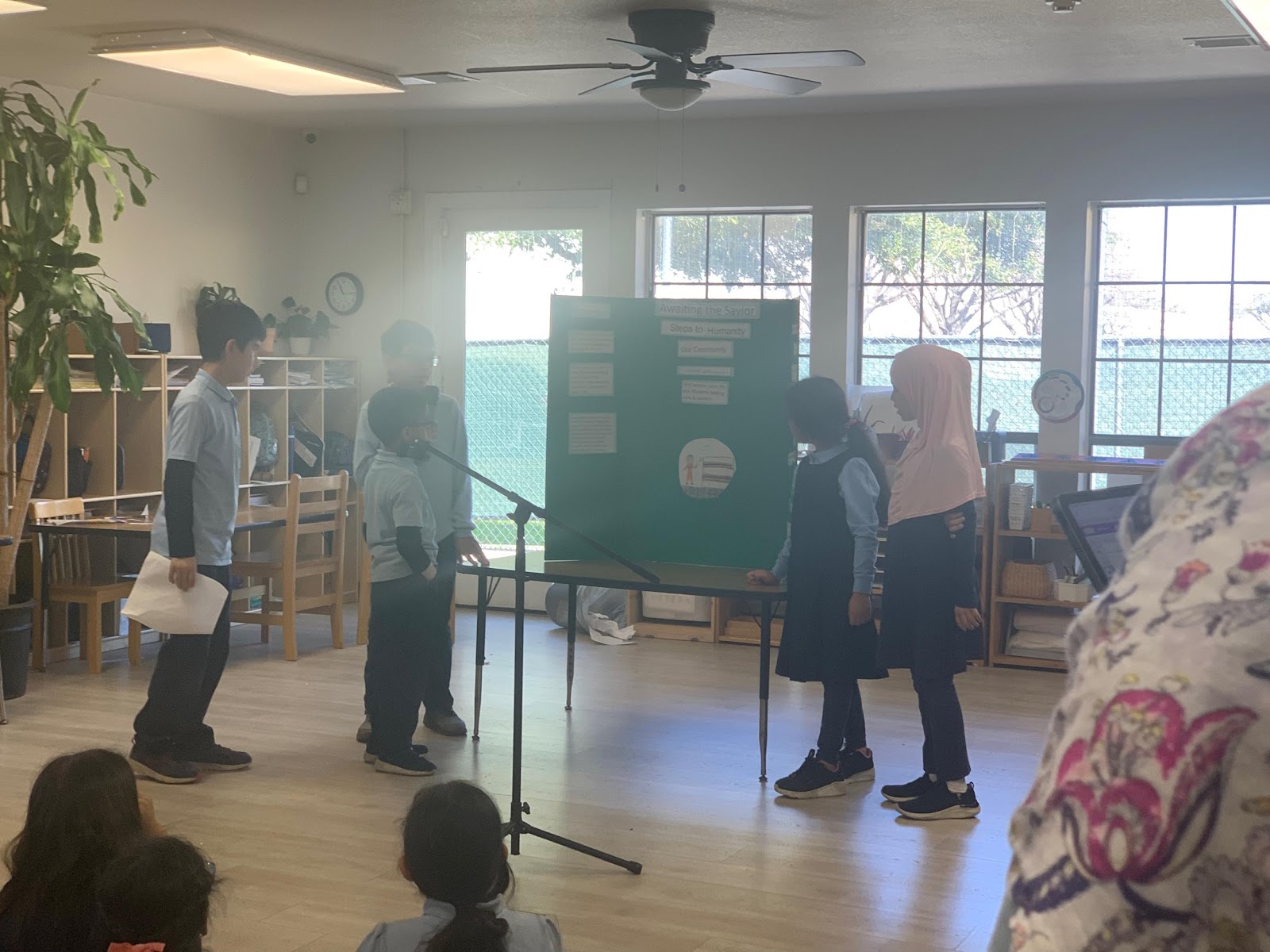
Elementary also worked very hard on their presentations for Yawm Al Hujjah. They presented what is the holistic role of a Muslim as they await Imam Mahdi (ajtf). They looked at the self, their community, the environment, the wider community, and stewardship. A big shout-out to Ms. Kaneez, Ms. Malak, Ms. Fadia, and Sheikh Al-Saadi for their help in rehearsals. 

9 Yawm al Hujjah: Writing the Intro to the Self Sector

10  Yawm al Hujjah: Referring to the Holy Qurān for Environmental Connections

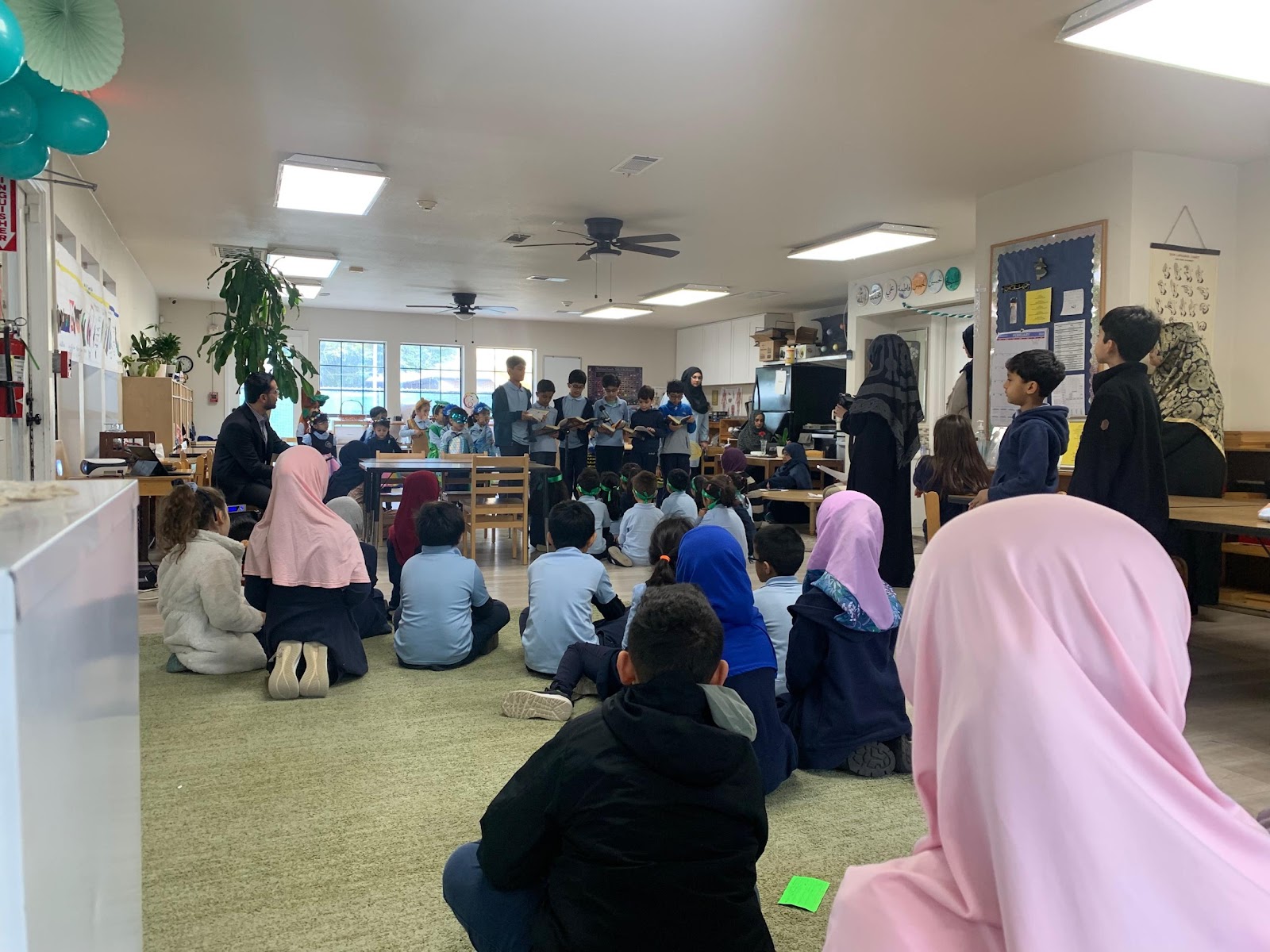
11 Yawm al Hujjah: School-Wide Rehearsals

12 Yawm al Hujjah: School-Wide Rehearsal

February 2024 Primary 2 Class News

By Mrs. Fizza Rizvi, Primary 2 Guide

Dearest Parents,

As-salam-o-Alaykum,

I would like to extend my heartfelt congratulations to you and your entire family for this blessed month of Sha’aban for the auspicious event of birth of not only our Imam of the time “Imam -e- Zaman (a.j)” but also, Imam Hussain (a.s), Hazrat Abbas (a.s) and Imam Sajjad (a.s).  May Allah bless you all in this wonderful month, inshAllah. 


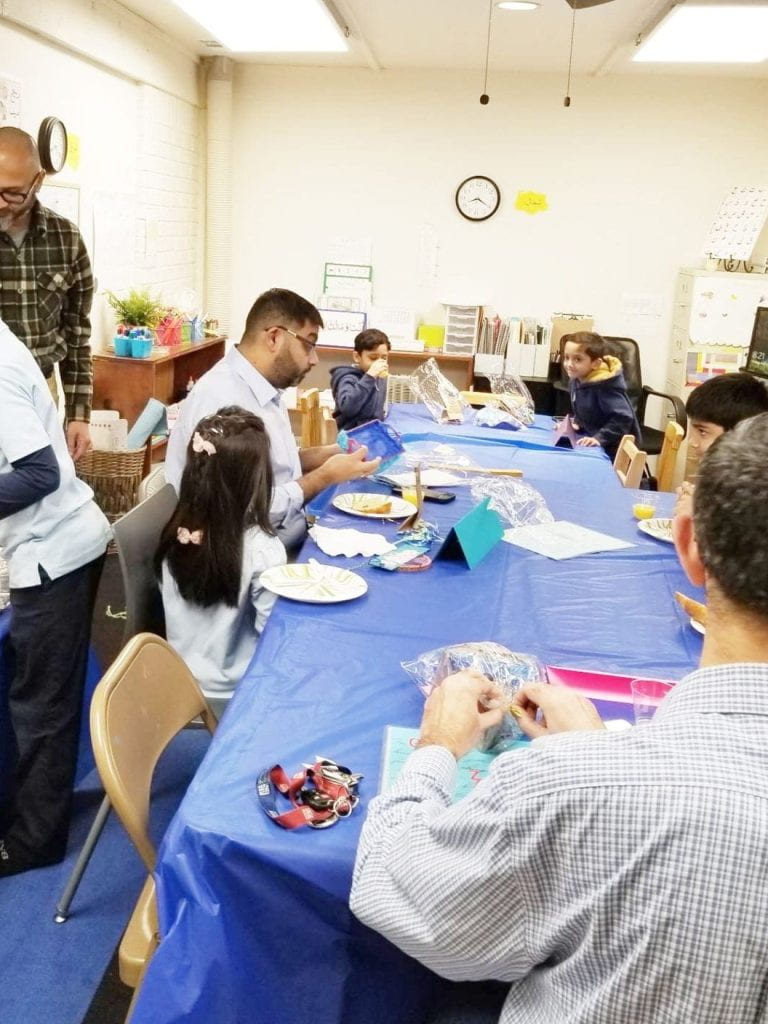
During the month of February, we were also humbled to host and honor our Dads by celebrating Fathers Day on the birthday of our first Imam, Imam Ali ibne Abutalib (a.s). We had a beautiful event of breakfast with fathers to show our love and gratitude to them. We truly enjoyed and appreciated the event. A big shout out to all the fathers for being amazing dads! May Allah bless you all.


As a part of story time routine by our very own Shaikh Al-Saadi, we also get honored by different Shaikhs, Syeds, and Ustadahs. This month we were honored to welcome Shaikh Kazim Khoja. Our children loved the story, and leaned a lot from it.


Now some news from our classroom: we tend to focus on the learning abilities of our children by focusing on and practicing a routine. From the time they wake up in the morning and start their daily routine, to the end of the day– when they follow a routine it allows them to practice self discipline. It is a valuable repetition, so every time they do the same thing it may look like they are just repeating, but that process boosts their self esteem and also decreases the degree of difficulty. 

Practical Life

Repetition of work will allow the children to practice, master, and retain the material. Daily repetition will give much needed practice and reinforcement. Some children are such careful observers while other children need more repetition and hands-on practice before they master a particular concept. It guides the child on how the repetition of activities can help them in day to day activities. Practical life activities revolve around strengthening the Fine Motor skills (pincer grip, pencil grip, and wrist movements) for young children. Most of the materials to conduct these activities are readily available at home. For example: loading and unloading of the dishwasher, folding clothes, dusting, and watering plants.

Sensorial Activities:

In sensorial lessons, repetition refines the five senses, encourages focus, breeds independence, and develops confidence in our work and ourselves.

Language:

We follow our routine of daily writing (tracing) our names to help master in letter formation. We try to make it as fun as possible by using different colored markers and using an eraser. We enforce the sounds by practicing and repeating the same sound in many ways such as writing in the air, writing on the chalkboard, sand tray, sound book, sandpaper letters, and other ways. And the result has just been amazing. Initially it was a struggle to think of a thing that starts with a particular sound, but now we hear not just 1 or 2, but many things starting with the sound. Repetition is important– but so is consistency. The consistency comes daily until they master in achieving the right sound and recognition. CONSISTENT and encouraging REPETITION can create big benefits to the children.

Math:

In Montessori, children learn math in three different stages: sensorial, concrete, and abstract. A child’s mind is mathematical and based on the order of perceptual awareness found in the development of the senses. In addition, the Montessori materials, which are multi-sensory learning tools, teach children how to problem solve and self-correct through repetition and practice. This sustained period of repetitive activity encourages children to develop the concentration and self-discipline required for more advanced work. The acquisition of mathematical principles is seen as developing logically from concrete to abstract, and from simple to complex.

February 2024 Primary Class News

By Tasneem Mamdani, Primary Guide

Dear Primary Parents, As-salaamu Alikum,
Congratulations to everyone on the blessed month of Shaban and the Birth Anniversary of the Imam of our time (AJTF). May Allah bless you and your families.
February has been an eventful and enriching month filled with growth, exploration, and celebrations. We marked special occasions such as the birthday of Imam ʿAlī and Father’s Day. Our students enjoyed engaging in activities such as decorating for their dads and participating in themed projects to honor these significant events. Additionally, we organized a special Breakfast with Fathers in honor of the birthday of Imam Ali (A).

HAPPY FATHER’S DAY TO OUR DADS

In this blog post, I want highlight one of the important and foundation of Montessori primary curriculum.

Exploring Practical Life: The Heart of Montessori Education:
In a Montessori classroom, Practical Life activities are at the core of a child’s development. They encompass caring for oneself and the environment through purposeful tasks like pouring water or washing a table. These activities not only refine fine motor skills but also nurture concentration and a sense of responsibility within the community.

Why Children Love Practical Life Work:
You may have heard the saying, “Play is work, and work is play.” As adults, we view work in a negative light because it entails the chores we have to do for a certain outcome. So, “play,” to us is anything separate from work. The young child does not view these activities through that same lens, though. They are working to understand what things are and how things work, and so they are naturally drawn to real-life work for the sake of process.

Children experience the same joy when they are washing the dishes as when they are building with Legos. Practical Life activities ensure that children are not restricted in their capacity to learn through real experiences, and instead, ensures this drive is supported.

The Benefits of Practical Life Activities:
Bonding with the Classroom Environment: Spending time on Practical Life activities helps children connect with the classroom and feel relaxed.
Developing Hand Strength and Coordination: Practical Life hones the development of the hand. Montessori said, “The skill of man’s hands is bound up with the development of the mind.” When children train their hands, they train their minds, and materials in Practical Life are meant to sharpen fine motor coordination while fostering an awareness of surroundings. All this work assists in increased functionality in the home as well.

Preparing for Academic Success: Practical Life activities actively nurture executive functioning skills, crucial for both academic and life success. Through activities like washing dishes or waiting for a peer to finish before taking turns, children learn emotional control, inhibition, working memory, and flexibility. These skills lay a strong foundation for future academic activities and overall success in life.

Thus, the Practical Life area in Montessori education serves as a vital bridge between academic learning and real-world application. By engaging in purposeful activities that promote independence, responsibility, and essential life skills, children not only thrive academically but also develop into well-rounded individuals capable of navigating the complexities of life with confidence and competence.

Islamic Studies:
We delved into the Ahl al-Bayt (A.S), focusing particularly on Imam Ḥusayn (A.S), commemorating his significance on the 3rd of Shaban as the last of the first five members of the Ahl al-Bayt (A.S).
Fostering Love for Salah:
At this tender age, our aim is to instill a love for Allah in young hearts, laying a strong foundation for their relationship with Him. By nurturing this love, children naturally develop an inclination towards Salah, finding joy in prayer. We encourage parents to create a spiritual environment at home by inviting their children to join them in Salah, even if it’s just for a part of the prayer. Additionally, gifting special Salah items can further ignite their love for prayer.
Lessons in Manners:
Throughout our sessions, we also covered essential manners for children, including family manners, friendship manners, manners at the masjid, and at school. Students learned about the importance of being kind and respectful, particularly towards their parents.
Recommended Reading:
To complement our lessons, we recommended engaging books from Kisa Kids, such as “Imam Hussain’s (A.S) New Friend,” “Animals in the Quran,” and the “Hakima and Hadi” series, which provide valuable insights into Islamic teachings in an accessible manner.


The 15th of Shaban is a very special day in the Islamic year. It is the Wilādah of the 12th Imām, Imām Muhammad al-Mahdi (AJTF)

We marked the birth of the Imam of our time (AJTF) with a week-long celebration filled with special treats each day and rehearsals for a special presentation. The excitement and confidence demonstrated by our students during their performances were truly inspiring. We extend our gratitude to all the parents and volunteers whose support contributed to the success of this program.