March 2024 Wisdom Academy

In the Name of God, the Beneficent, the Merciful

Primary Class News

As we await the arrival of warmer weather and the blossoming of spring, our children are experiencing their own growth and learning journey. Spring provides a perfect opportunity to explore patterns and cycles, from the changing seasons to the life cycle of creatures like the monarch butterfly. Understanding patterns is essential in various subjects, including math, science, and Islamic studies and allows our children to connect with the rhythms of nature and the world around them.

READ MORE ABOUT PRIMARY 1 HERE


Primary 2 Class News

In our classroom we see the emergence of the will when the child makes a deliberate act. What are these acts of will that we see in the child? Each time the child chooses from a number of objects, those that he prefers to work with that is an act of the will. It has been observed that young children are happiest when they are engaged in real-life, ordinary activities.

READ MORE ABOUT PRIMARY 2 HERE


Quran Studies News

Level One: (4 years old and beginners of 5 years old children) Children practiced Surah Al Kafiroon الكَافِرون and they reviewed all previous Surahs.
Level Two: (5 years old children) Children practiced Surah Al Teen التِّين, Surah Al Humaza الهُمَزة, and they reviewed all previous Surahs. They also practice Dua prophet Ibrahim (as).

READ MORE ABOUT QURAN STUDIES HERE


Elementary Class News

Shahr Ramadhan and its aftermath of implemented practices that keep us on the right path are much like the lessons and the extensions in the Elementary classroom. There is the lesson and then the student goes off on their own to show what they have learned, implementing and expressing their newfound knowledge. In the environment these are called extensions or follow-ups. The child brings their own abilities to the understanding of the concept at hand. 

READ MORE ABOUT ELEMENTARY HERE

In Mathematics, grade 7 students continued studying volumes and surface areas of solids, where they practiced converting between different units of measurements of length, area, and volume. In Geometry, grade 9 students examined several aspects of coordinate geometry and generalized their thinking about figures on the coordinate plane.

In Science, Grade 7 students learned more about index fossils and the law of fossil succession. In Biology, our Grade 9 student explored how molecular biologists use restriction enzymes, gel electrophoresis, and DNA sequencing technologies to study the human genome.

In social studies, the 7th graders are studying Civilizations of the Americas, including the Maya, Aztec, and Inca civilizations. In the 9th grade world history course, we have begun Unit 5 of the textbook, which is entitled “A World in Crisis,” which covers the 20th century up until World War II. In English, both classes are completing their novel units.

READ MORE ABOUT UPPER SCHOOL HERE


Inshaa’Allah

April 10th – Eid al Fitr (No School)

April 15th thru 19th – Parent Observations

April 26th – No School / Staff Inservice

April 29th thru May 2nd – Parent Conferences


Alhamdulillah! We thank the parents, families, and community for their continuing support and encouragement. If you have any questions, comments, or ideas, we would love to hear from you! Please leave your comments!

March 2024 Upper School News

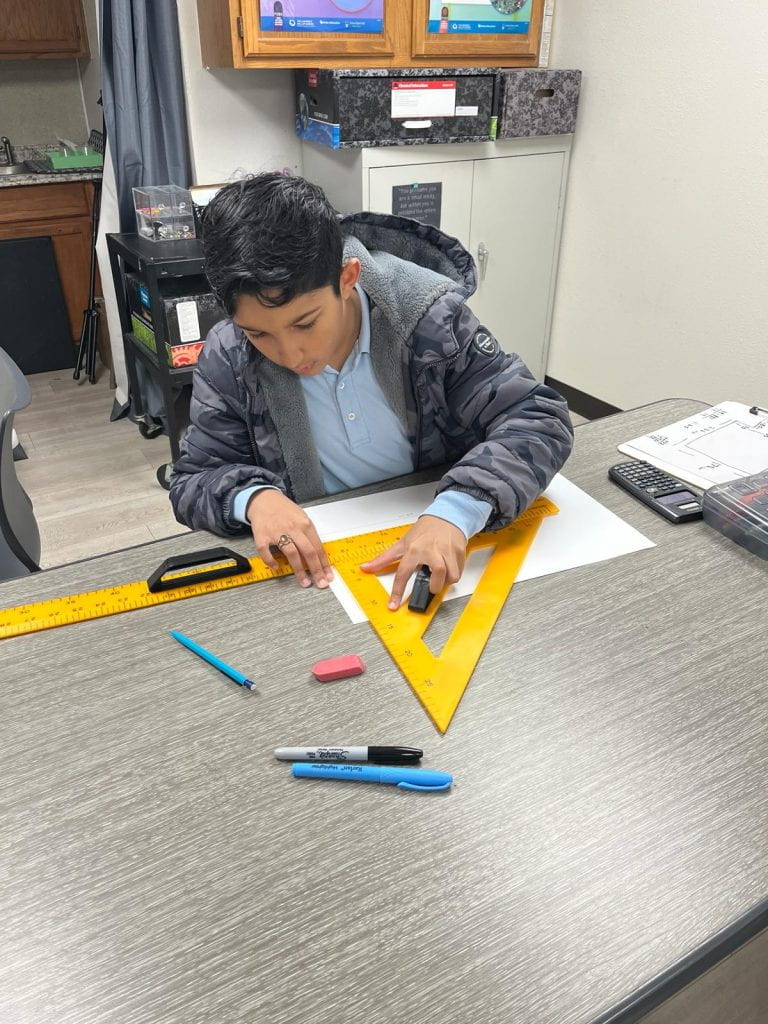
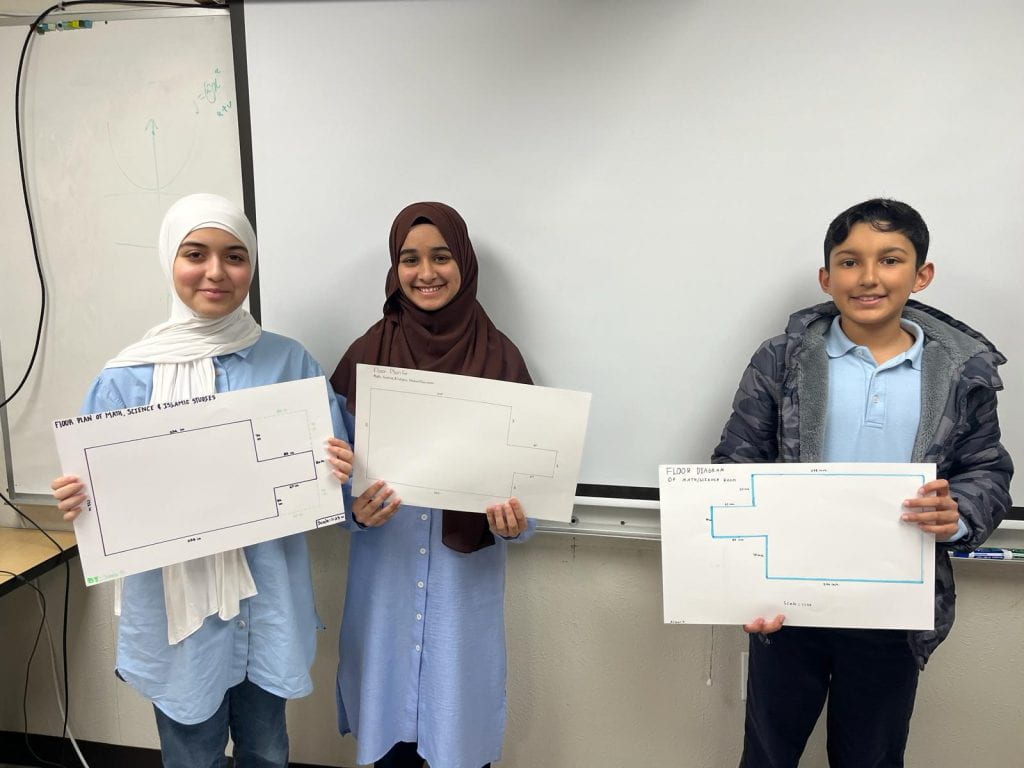
In Mathematics, grade 7 students continued studying volumes and surface areas of solids, where they practiced converting between different units of measurements of length, area, and volume. Later students studied scale drawings and maps to evaluate actual lengths and areas using a given scale, and they used this understanding to generate a floor plan for their own classroom after identifying the most reasonable scale to use. Students were also introduced to direct and indirect proportion, and recognized these relations from tables, graphs, equations and verbal descriptions of proportional relationships as they solved problems.

In Geometry, grade 9 students examined several aspects of coordinate geometry and generalized their thinking about figures on the coordinate plane. They placed different types of figures on the coordinate plane to prove properties of that type of figure. They also explored circles and parabolas in the coordinate plane, where they applied coordinate geometry to establish their equations, and used them to solve problems


By Mrs. Malak Charara, Science and Electives Teacher:

In Science, Grade 7 students learned more about index fossils and the law of fossil succession. They also explored the geologic time scale and how paleontologists use radioactive decay for absolute dating of records. Throughout our lessons, we discussed the type of information we can gain from organizing such data. After that, we moved on to investigate the formation of another class of rocks known as “Igneous rocks” and how their minerals form different sizes, shapes, and colors of magnificent crystals.

In Elective Nutrition, Grade 7 students resumed learning about the third category of energy-yielding nutrients – Proteins. We discussed the dietary recommendations based on various factors, complete and incomplete protein sources based on their content of essential amino acids – which are the building blocks of proteins, and some concerns regarding their excessive consumption and deficiency. We also touched on the types of vegetarianism, pros, and cons and whether this diet approach aligns with our Islamic teachings related to animal-derived food consumption.

In Biology, our Grade 9 student explored how molecular biologists use restriction enzymes, gel electrophoresis, and DNA sequencing technologies to study the human genome. We have also explored the new methods of genetic engineering including identifying genes, amplifying DNA using polymerase chain reaction (PCR), designing recombinant DNA and using it to produce transgenic organisms. We wrapped up our Genetics unit by discussing the applications of biotechnology in the form of transgenic or genetically modified crops and animals for food, genetic methods for combating disease and even detecting viral infections like the test that was used to detect COVID-19 at the beginning of the pandemic – the PCR test! Next, we moved on to explore a new unit of “Evolution”. We discussed the processes of natural and artificial selection, evidence of evolution that are concurred by our Islamic believes and how they serve as reminders of Allah’s (swt) divine creation.

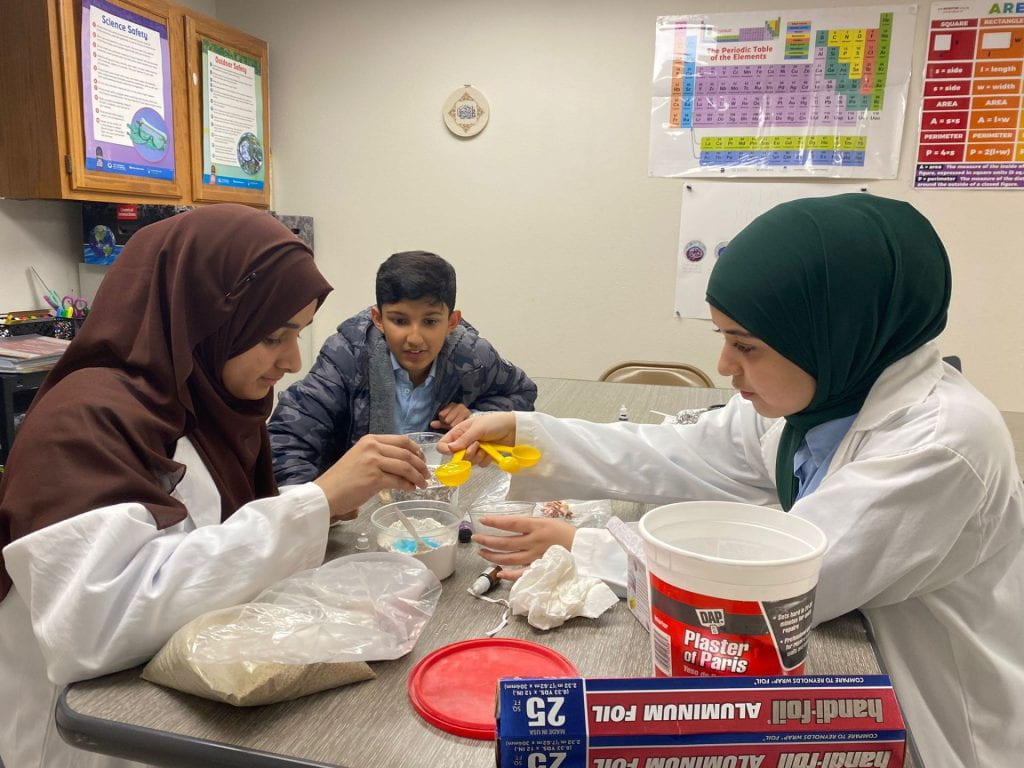
Grade 7 students preparing their DIY fossil dig
And this is how they turned out!
Grade 7 students preparing some zaatar and cheese pies for a taste test!
Mariam explaining some of the cons of a vegan diet.

By Br. Yusuf Ali, English, History, and Social Studies Teacher:

In social studies, the 7th graders are studying Civilizations of the Americas, including the Maya, Aztec, and Inca civilizations. Each student volunteered to study one of the topics in each unit and prepare lessons on their topics, which they will present to the rest of the class.

In the 9th grade world history course, we have begun Unit 5 of the textbook, which is entitled “A World in Crisis,” which covers the 20th century up until World War II. We have also continued working on a research project on how the modern-day Muslim world, particularly the Arab regions and Palestine have been shaped by the Western imperialist aspirations and conflicts that caused World War I and II.

In English, both classes are completing their novel units. The 7th graders have completed The Prince and the Pauper by Mark Twain, and have begun writing literary analysis papers with a focus on analyzing character, plot, and setting. The 9th grade class has completed A Tale of Two Cities by Charles Dickens, as well as a literary analysis paper focused on themes, motifs, and symbolism in the novel.

March 2024 Elementary Class News

By Ms. Hind Sabir, Elementary Guide

Salaam Dear Parents, 

As the Holy Month of Ramadhan wanes and we look to celebrate Eid al Fitr, we hope and pray that the practices put forth in this month become commonplace in our daily lives, ان شاء الله . 

Extensions of Our Knowledge

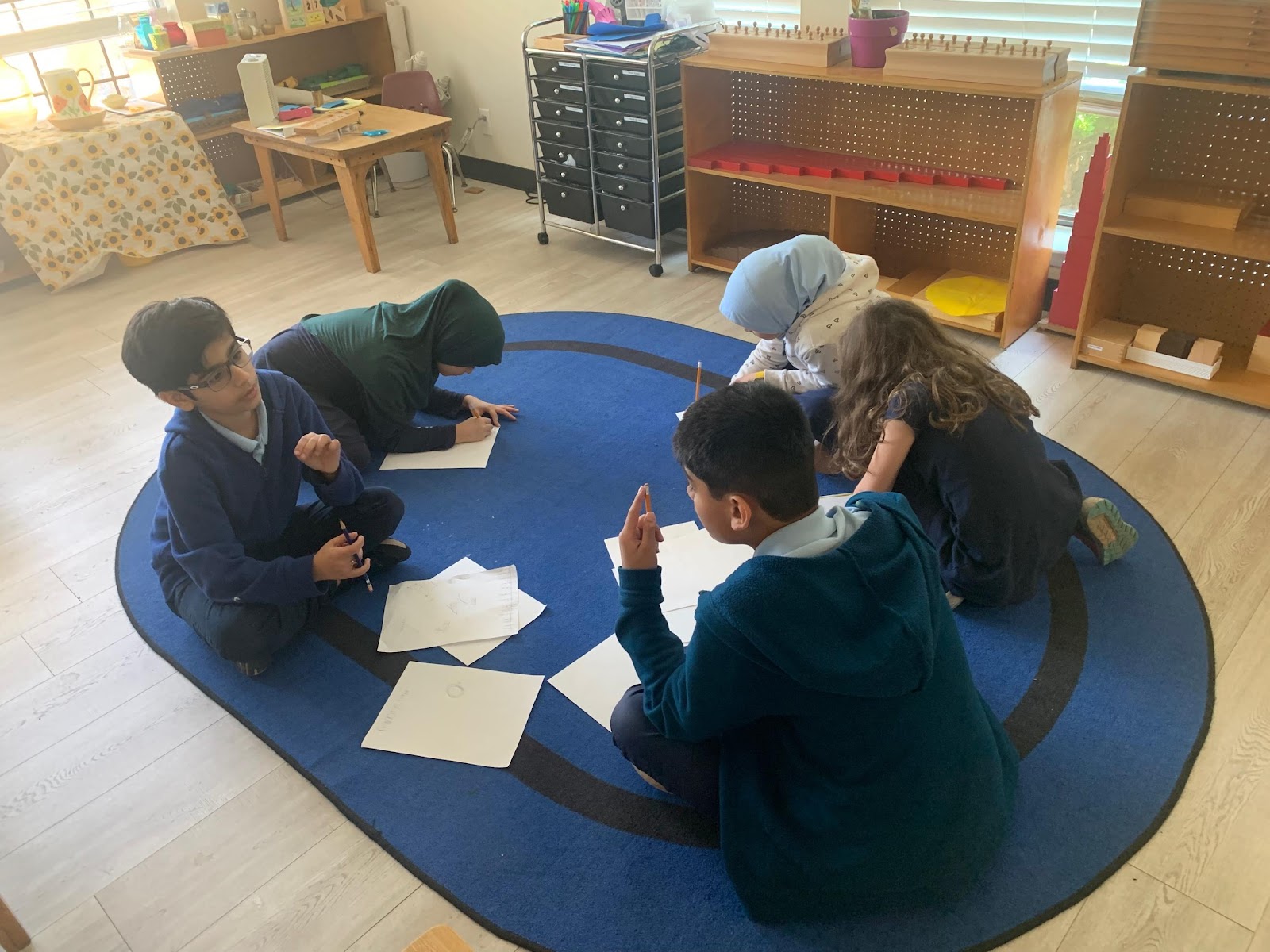
Shahr Ramadhan and its aftermath of implemented practices that keep us on the right path are much like the lessons and the extensions in the Elementary classroom. There is the lesson and then the student goes off on their own to show what they have learned, implementing and expressing their newfound knowledge. In the environment these are called extensions or follow-ups. The child brings their own abilities to the understanding of the concept at hand. 

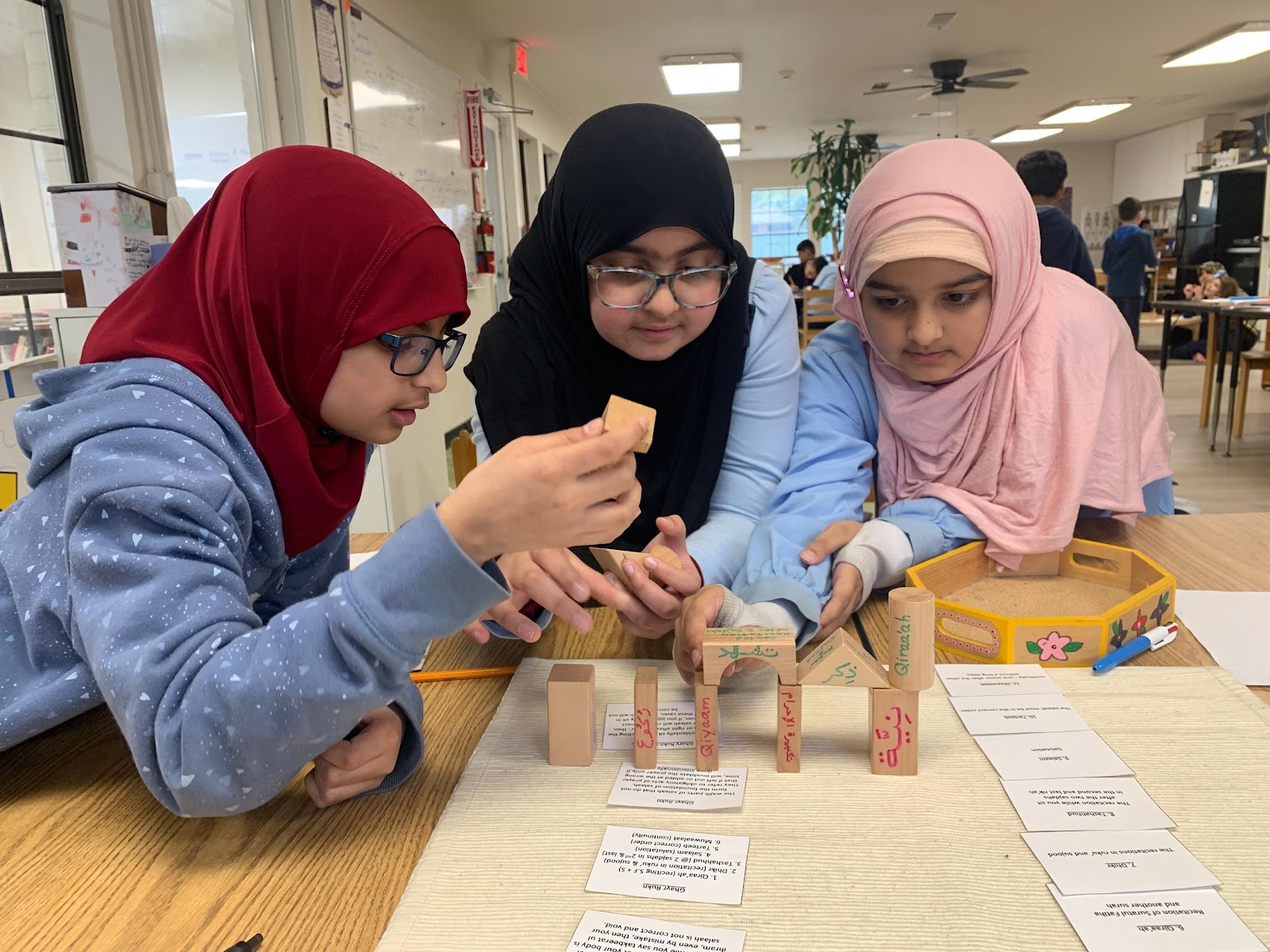
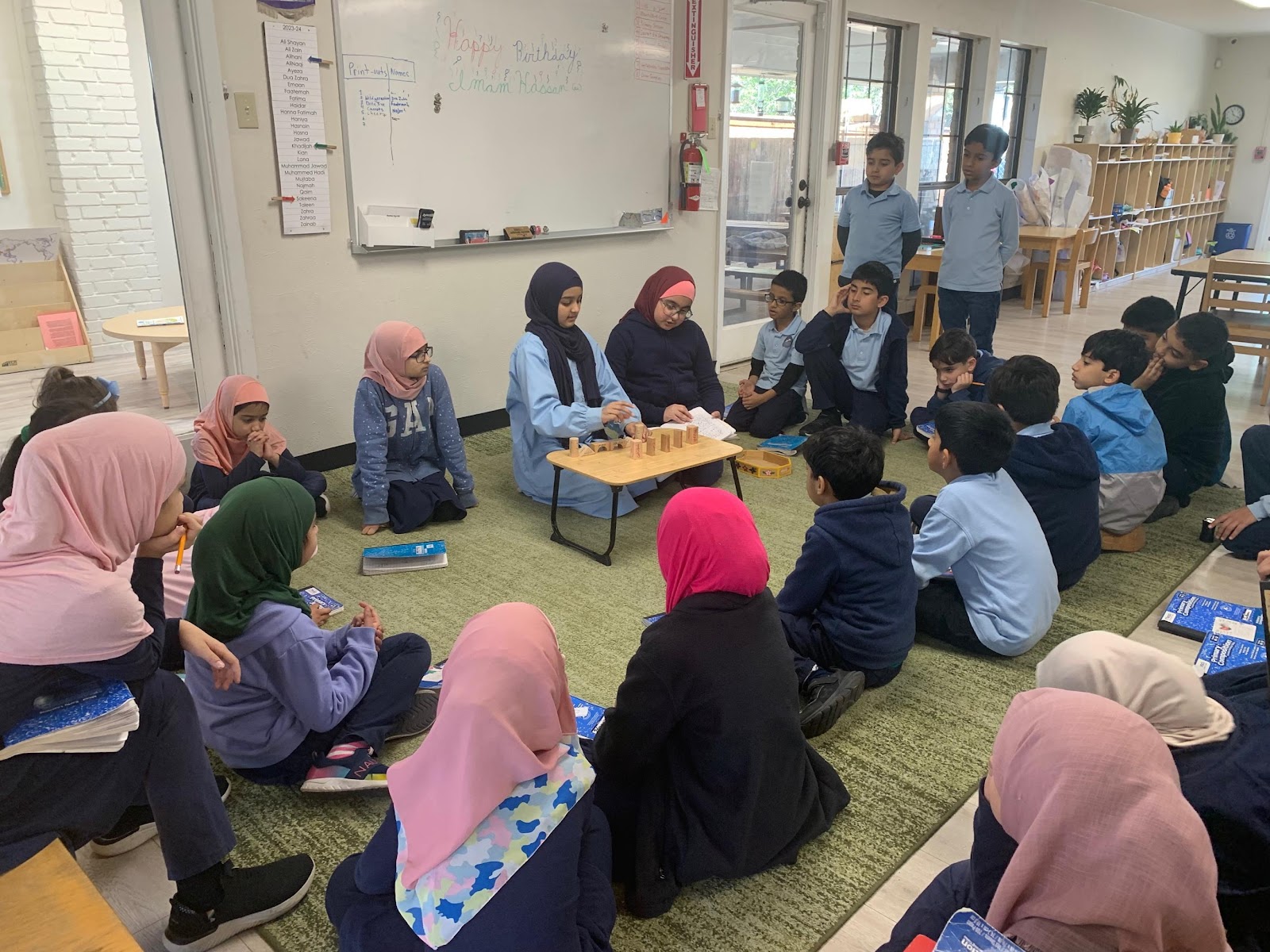
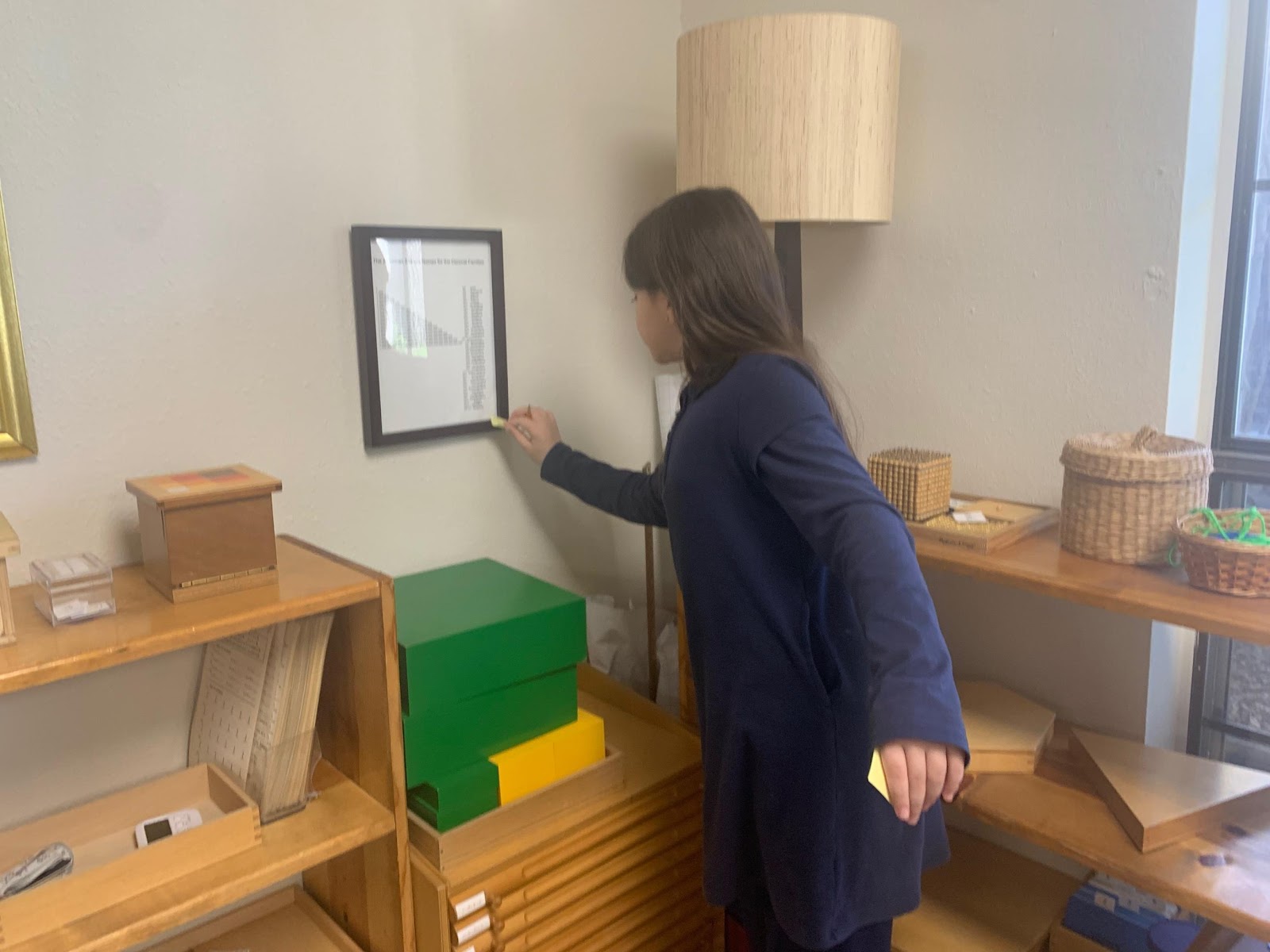
In Islamic studies, for example, there is the work of the Wajibaat of Salaah. The child learns what are the 11 wajib acts of salaah and their breakdown of rukn (pillar) or ghayr rukn (non-pillar). Through the materials (see picture A), the students understand and manipulate the lesson. Later, through their own work (picture B), here in a representation of the lesson to their peers, creates in them a teacher that in turn manifests as the best method for internalizing information. As Imam Ali (as) reminds us that “to teach is to learn.” Another form of the follow-up is the ability to create out of a lesson a new work of one’s own understanding (picture C). Here, the student uses their own abilities or affinities to create an understanding of the lesson or concept. This is what is known in Montessori as “following the child.” 

A: Wajibaat of Salaah – The Lesson & Manipulation of Materials 

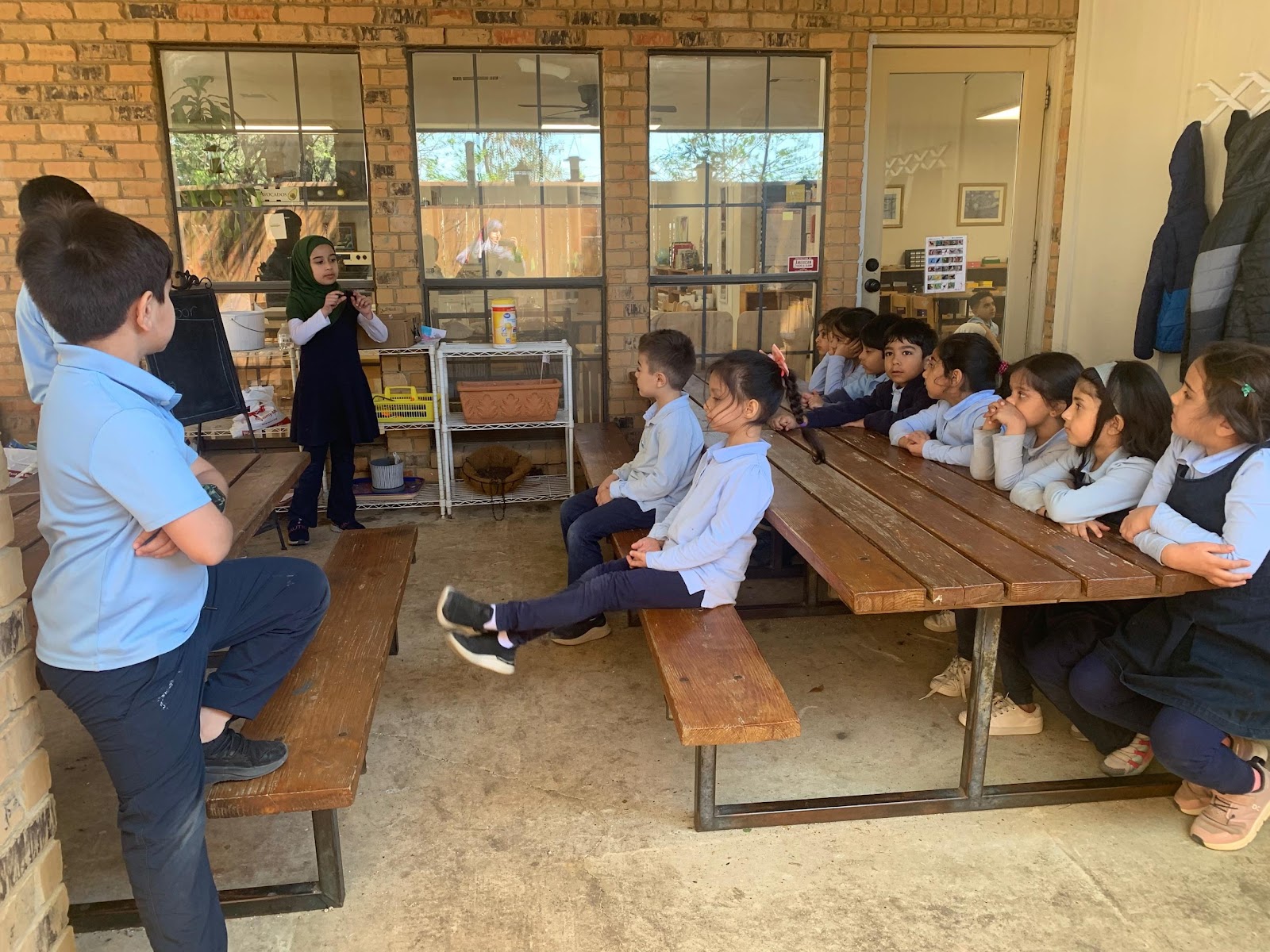
B: Wajibaat of Salaah – The Representation to Peers

C: Wajibaat of Salaah: The Invention of a Game

There is much good in this method of teaching. The work and the child become one and soon work becomes play because the students have been given the trust of the lesson and it is said to them, “here, now show me what you know.” They come back with compelling evidence, ما شاء الله , or even lack thereof, in which they need to reexamine their approach or need to be represented the lesson. 

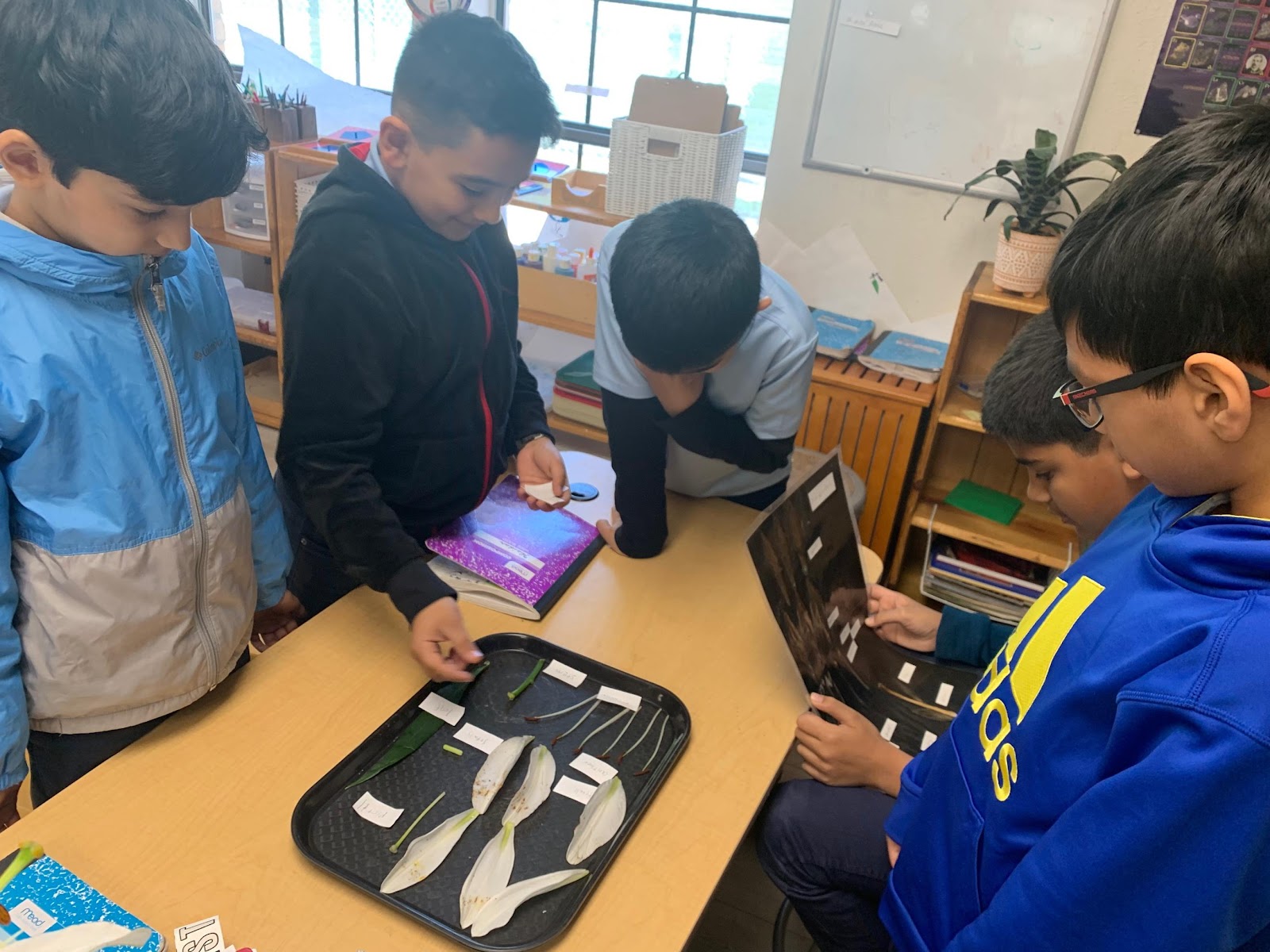
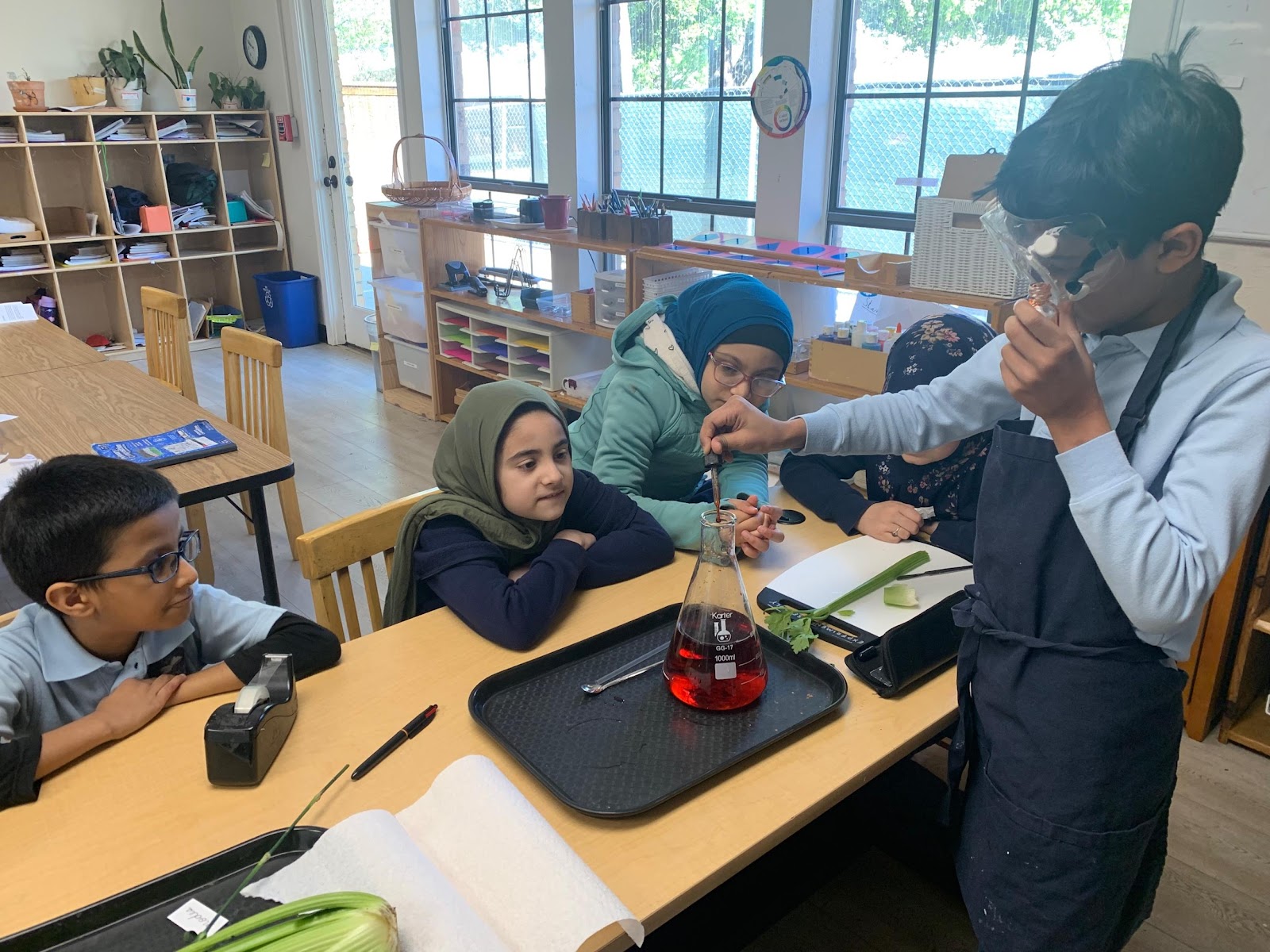
The same is true in other areas of study. In botany, the students expressed their understanding to experiments and dissections. With the ability to label the parts of the flower, the dissection became a great learning tool. While, the work of stems and their capillary action became an integral and exciting experiment of color combinations and movement. 

D: Dissection of a Flower, Followed by Labeling

E: Setting Up the Experiment to Learn About the Job of Capillaries in Stems

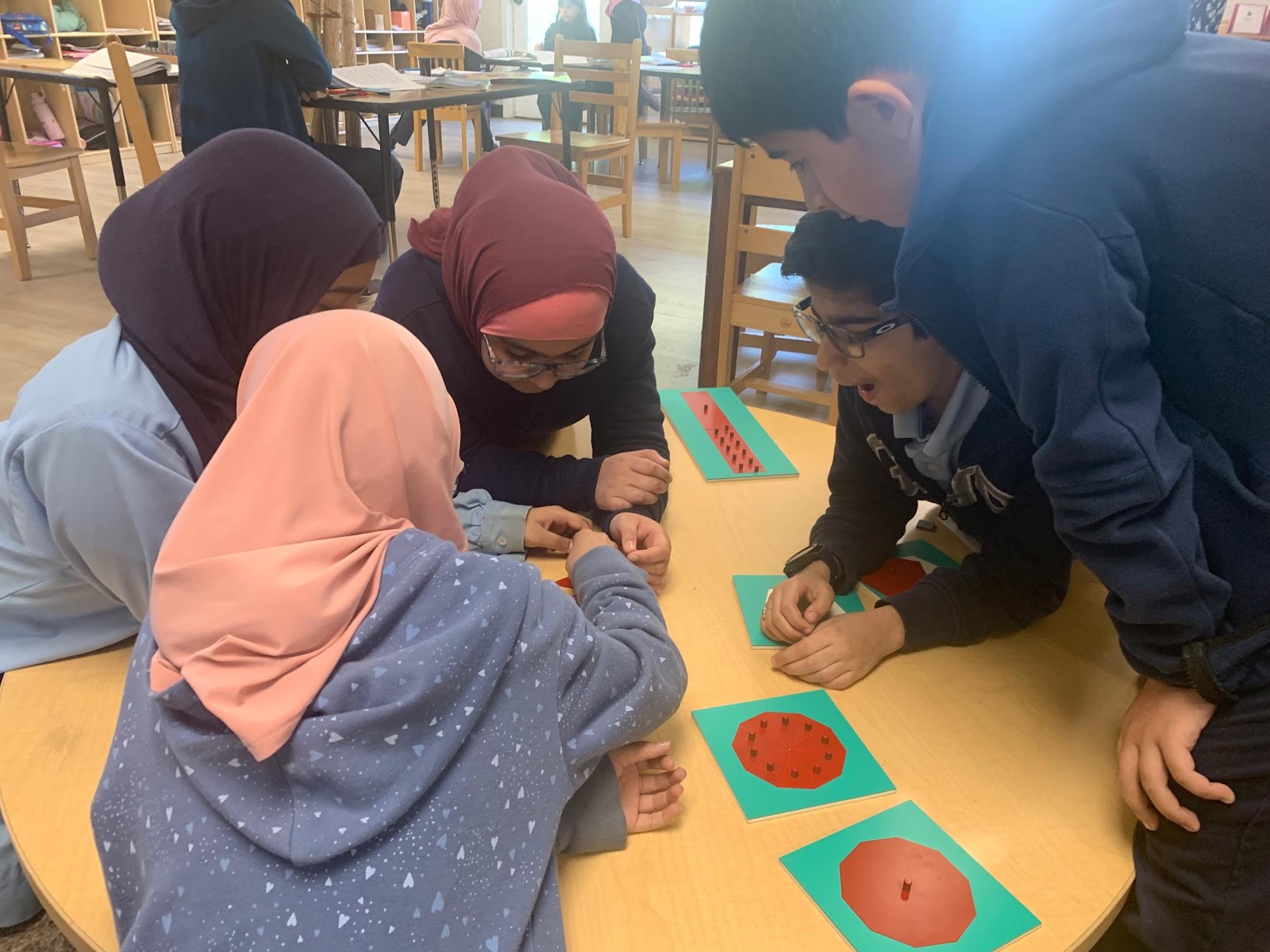
While in geometry, the students began manipulating or handling the material to achieve a greater depth of exposure through time and error in practice. This ability allows the students to discover for themselves the concept through trial and error. 

F: Finding the Commonality of a Decagon and a Rectangle

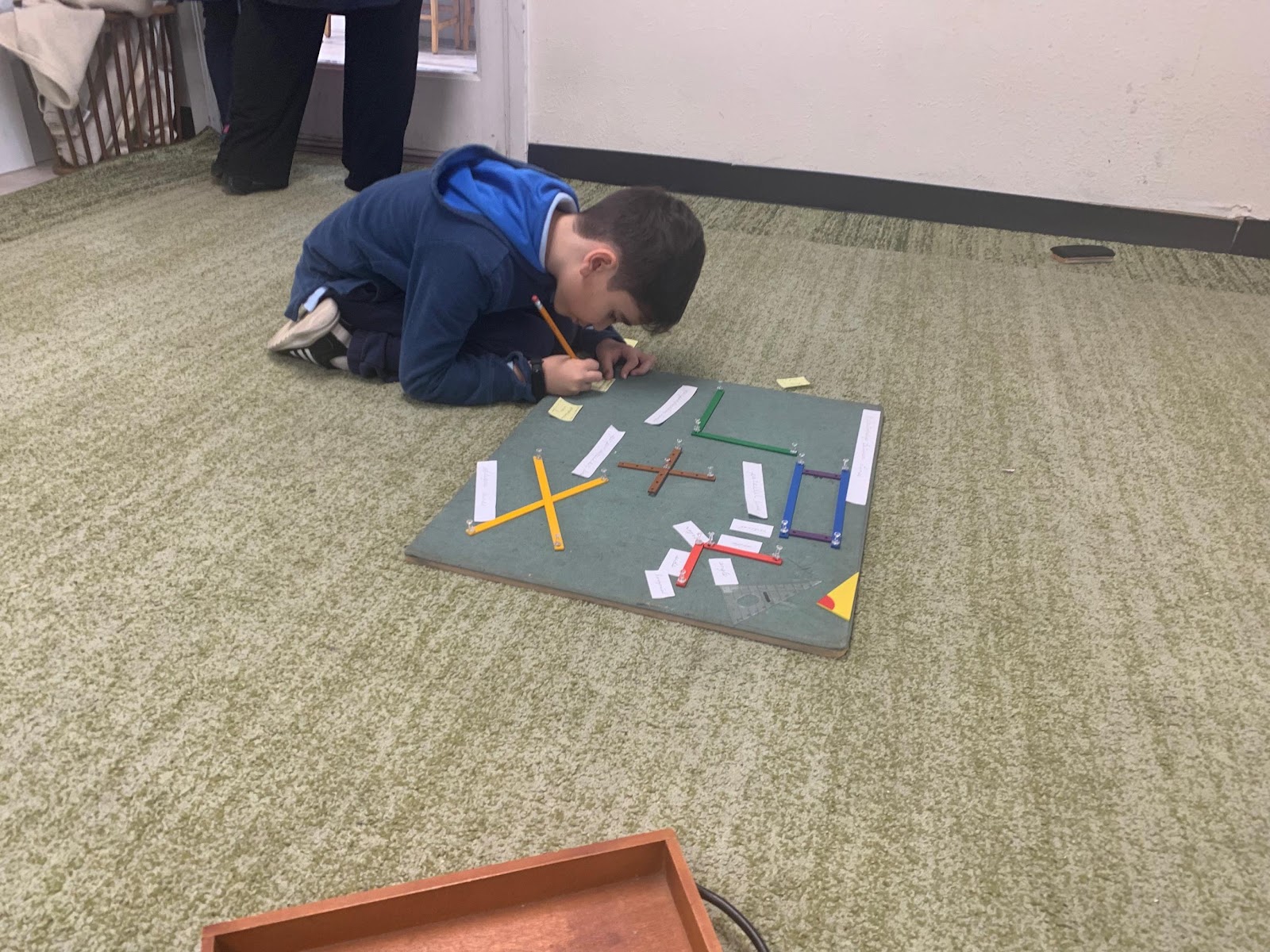
G: The Relationship Between Lines – The Lesson

H: The Relationship Between Lines – The Follow-Up – the Physical Implementation in the Real World

Brainstorming for the Decorated Door Completion

This year as part of Shahr Ramadhan, the whole school is involved in decorating their doors for a contest. The theme is “We Stand With Palestine.” The Elementary has been hard at work brainstorming to bring out their best ideas. Some of the students have partnered to take their hearts and minds to the Quran classroom, while others have collaborated with Primary to assist them in bringing their ideas to fruition. 

I: Collaborating to Decorate the Quran Door

J: Collaborating with Primary

Wisdom Academy Annual Iftaar

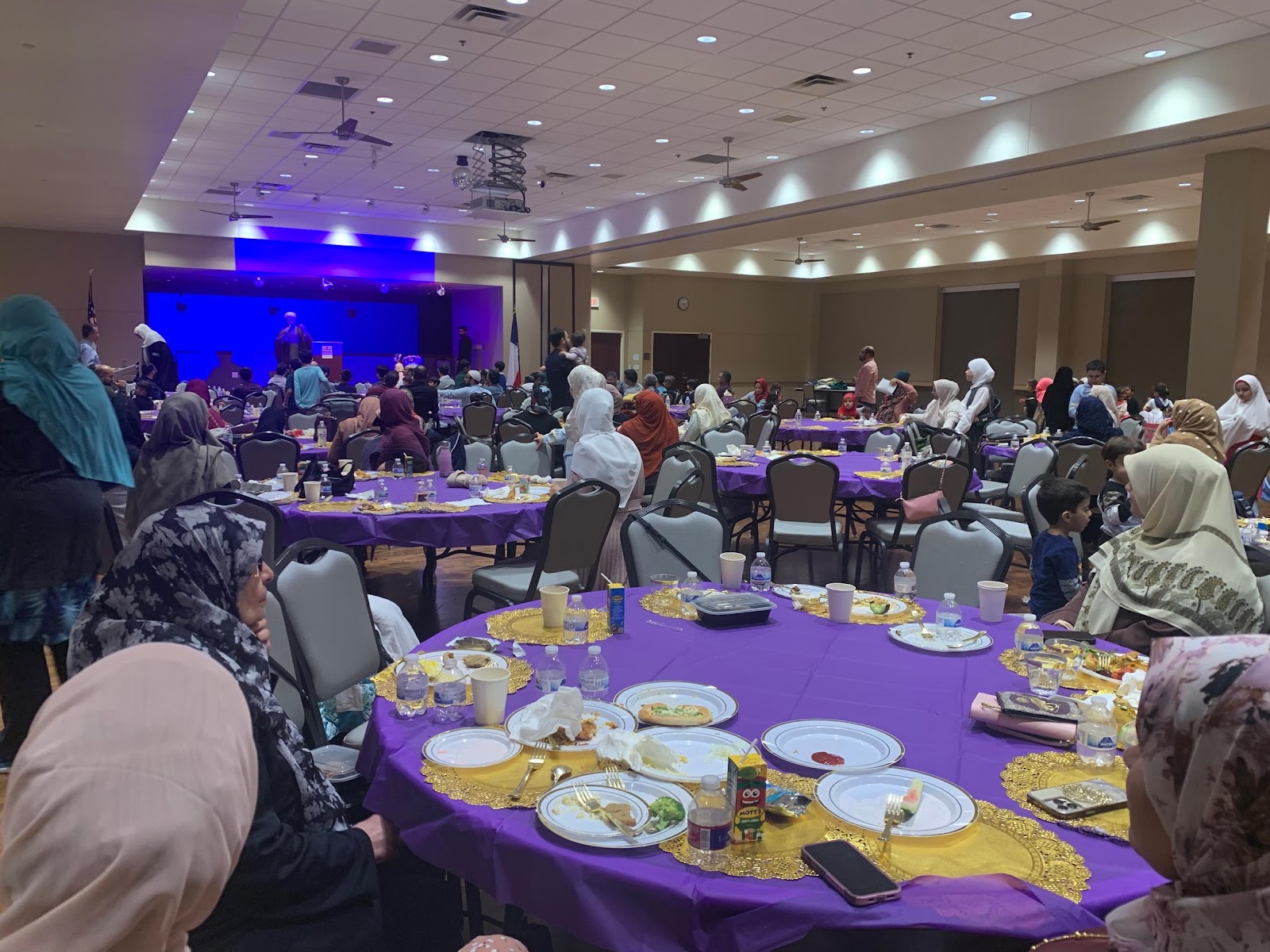
The iftaar dinner this year was a symbol of strength and unity as we all gathered to break our fasts as one family. It was lovely seeing you all. I pray our Wisdom family grows in strength through taqwa and service to our children – the future Ummah. Thank you for WA events team for setting a beautiful sufrah and to all the volunteers who contributed through iftaar and other means. May Allah (swt) continue to bless our school, ان شاء الله .

K: Sheikh Mohammed Al-Saadi Addresses the Families at the WA Annual Iftaar

March 2024 Quran Studies News

By Mrs. Fadia Ali, Quran Studies Teacher

Alsalamu Alikum Dear Parents,
I wish you all and your families a blessed and peaceful Month of Ramadan Insha’Allah. May Allah (swt) accept your worship عِبَادات and good deeds, and multiply your reward in this holy month of mercy and forgiveness of Allah (swt) Insha’Allah.
This is a summary of your children’s Qur’an work during the month of March, 2024.

Primary:
Level One: (4 years old and beginners of 5 years old children) Children practiced Surah Al Kafiroon الكَافِرون and they reviewed all previous Surahs.
Level Two: (5 years old children) Children practiced Surah Al Teen التِّين, Surah Al Humaza الهُمَزة, and they reviewed all previous Surahs. They also practice Dua prophet Ibrahim (as).
We usually focus in these two primary levels on the correct pronunciation of the Arabic letters and words, and on the memorization of number of small Surahs and Duas the correct way. (All Duas are from the Noble Qur’an)
Elementary:
Our main focus for all Elementary levels in this month of Ramadan is on Quran Recitation, to gain both, fluency and reward from Allah (swt) Insha’Allah.
Group One (level two Qur’an): Students finished all reading grammars (the Qaida) Al hamduliallah, and started reading the 30th Juza of the Quran.
Group Two (level two Qur’an): Students started reading the last 2 Juza of the Quran Juza 29th for the month of Ramadan (reading without repetition). They also continued practicing Surah Al Qyamah القِيامة.
Group Three (level two Qur’an): Students started with Surah Al Baqharah البَقَرة for the month of Ramadan (reading without repetition). They also continued practicing Surah Al Qyamah القِيامة.
Our main focus at level two (groups two and three) is on improving student’s recitation of the Noble Quran’s. Groups Four and Five (level three Qur’an): Students started with Surah Al Baqharah البَقَرة for the month of Ramadan (reading without repetition), while they continued practicing Surah Al Mulk المُلك. Students also learned more Quran vocabulary (family members)Our focus at level 3 (groups four & five) is on reading, on Qur’an vocabulary memorization, and on writing; our goal is to help children learn the most efficient way of Arabic writing, and to help them develop a sense of direction of their Arabic writing (which is opposite of the direction of English writing), and develop a sense of the right size of the Arabic written words.
Upper School:
Our main focus for Middle and High school levels in this month of Ramadan is on Quran Recitation, to gain both, fluency and reward of Allah (swt) Insha’Allah.
7th grade: Students reviewed Tajweed rules in more details and applied them while reciting part 1 to 5 of Surah Al Kahf الكَهف (pages 1 to 10 of Surah AlKahf), in addition they learned 3 new Dua’as and their translation for the month of Ramadan. They also learned new Hadeeth of the Prophet and Ahlulbayt (as) (Hadeeth Al Sadaqah), and Quran Quest; (Surah Al Zalzalah الزلزلة سورة).
9th grade: Student reviewed Chapters 1 to 6 of the No nonsense Arabic book for the midterm exam. They also practiced reciting Quran starting with Surah Al Baqharah البَقرة. The goal is to finish reciting the whole Quran by end of Ramadan Insha’Allah and practice applying all learned Tajweed rules (recitation is done in both; school and home).

March 2024 Primary 2 Class News

By Mrs. Fizza Rizvi, Primary 2 Guide

First and foremost I want to congratulate you all for the blessed month of Ramadan and pray for everyone’s health and prosperity. May Allah bless the whole entire ummah with His endless blessings inshAllah.
What a happening month March was! Be it the Wiladat of our Present Imam (a.j), co-curricular activities, or the start of month of Ramadan — it definitely felt like everything happened in the month of March! Let’s check the details of the events.

Highlights:


Maulud -ul- Hujjah a.j
What an incredible event it was. I’d like to pay my gratitude to all of you for making this event a success. It was indeed one of the best school events, and it could not be this memorable and magnificent without your help and support. A huge and warm thanks to all the volunteers who helped us in any way. Our children worked so hard and showcased a beautiful performance for our audience. It wasn’t easy for our young friends to do this phenomenal performance, but again with all the support from our parents they did it.

Planting with Parents
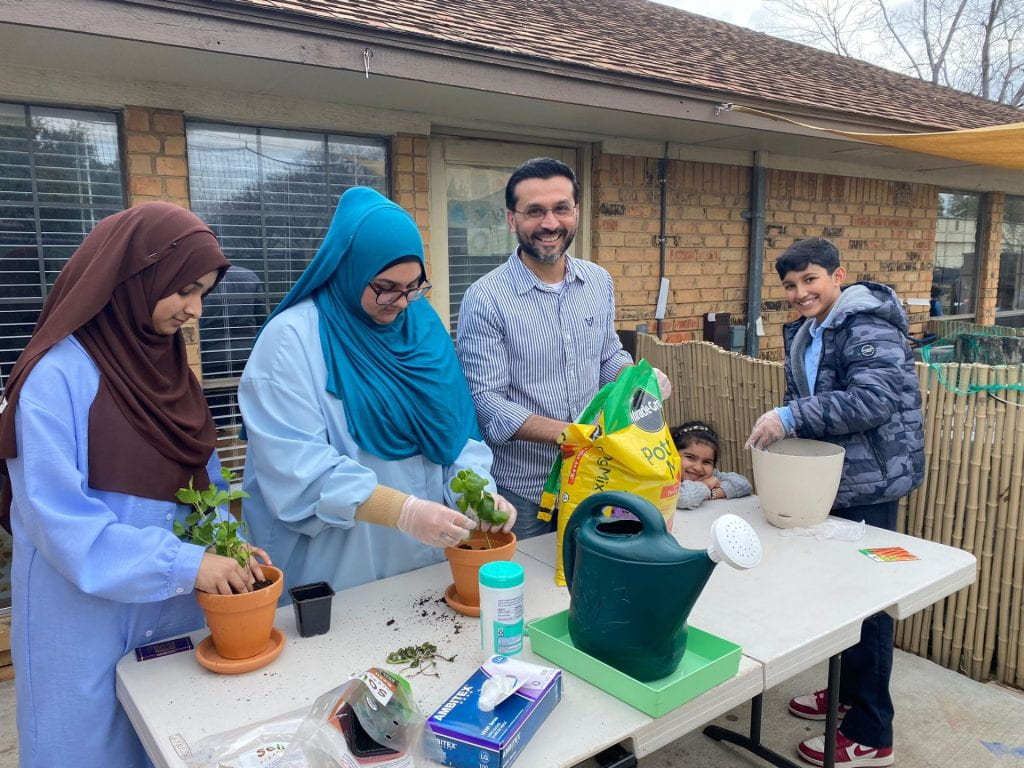
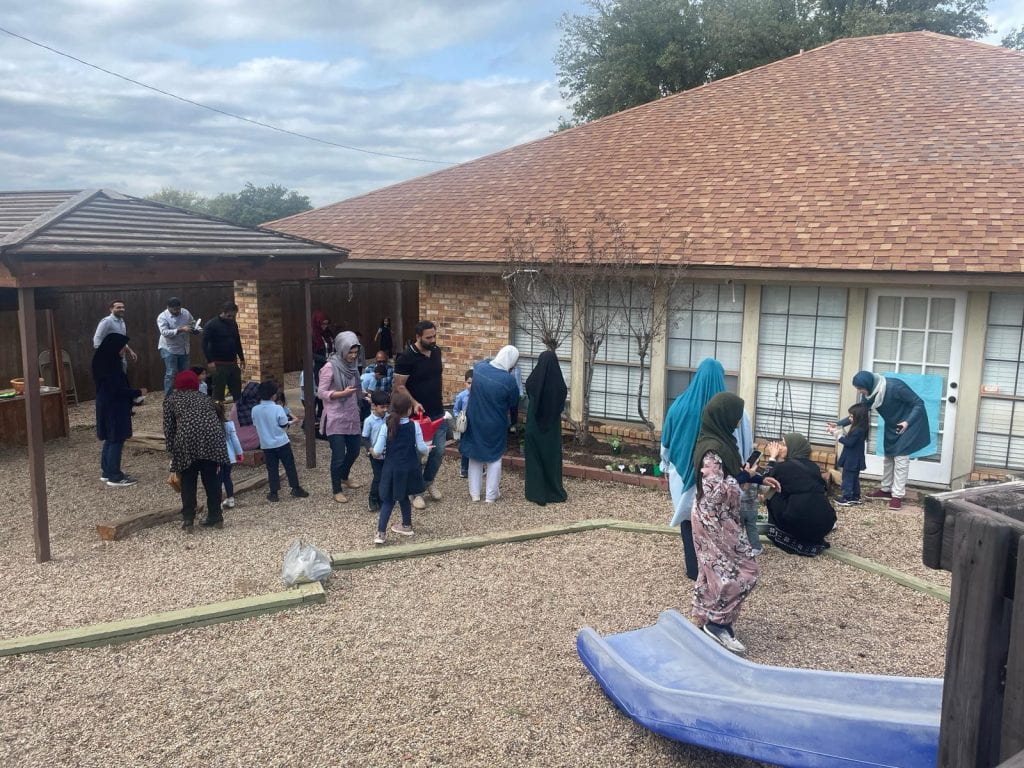
The next event in line was Planting with Parents. Since the start of the day everyone was very excited to plant with their parents. I thank and appreciate you all for taking out time and managing to come and be with your children. As our plants are now growing, so too is the excitement of our children to see the fruits of their plants!

Storytime with Syed Razavi
Storytime is one of our children’s favorite parts of the week. We wait the entire week for this special activity. Storytime is not just an ordinary story but an indirect spiritual development. This month we were honored by Syed Razavi for our story time. He read us a beautiful story with a beautiful lesson behind it.

School Wide Iftar event
As we welcomed the holy and blessed month of Ramadan. There could not be anything better but to open our fast with our dearest Wisdom Family. It was very wonderfully organized — all thanks to our volunteers and families who attended and made it an exciting event. It was a pure joy to see the excitement for the Kahoot. Congratulations to all the winners.

Now let’s talk about our classroom:

Practical Life:
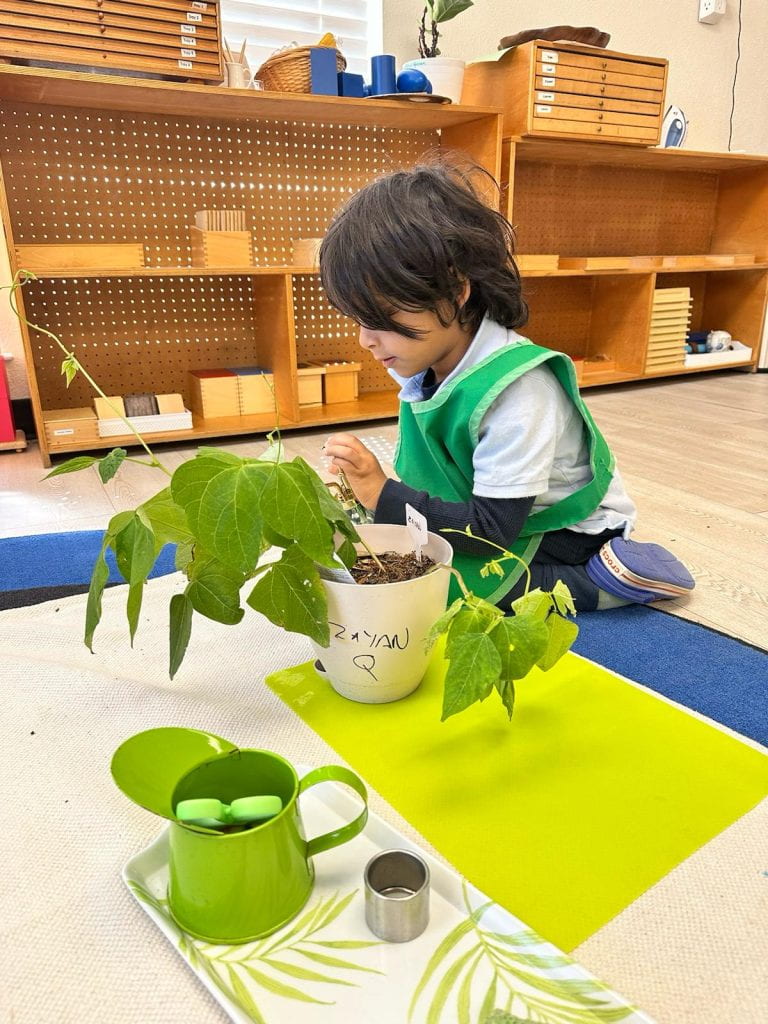
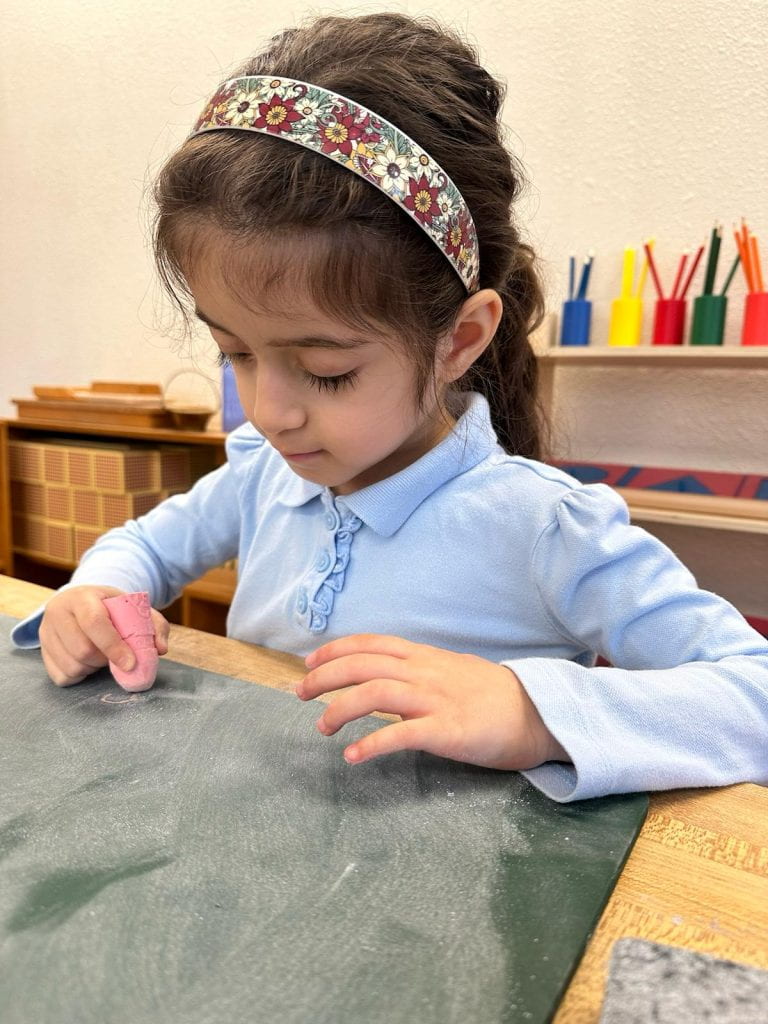
In our classroom we see the emergence of the will when the child makes a deliberate act. What are these acts of will that we see in the child? Each time the child chooses from a number of objects those that he prefers to work with that is an act of the will. It has been observed that young children are happiest when they are engaged in real-life, ordinary activities. They enjoy wiping down tables, sweeping floors or watering the plants or as simple as folding the clothes. We encourage our children to be the part of house chores at home so they have the opportunity and sense of being the important part of the community.

Language:
You might be familiar with the old English saying, “Where there is a will, there is a way.” It implies that if you have a steadfast belief to achieve something, you will surely find a way to make it happen. This implies that when we are wilful about doing something, we are impulsive and determined to put the best of our efforts into the respective task. But on the contrary, if we impose our will on children, we are trying to make them do things they don’t desire to do. And this might lead them to protest and refuse to cooperate. The trivial habit of choosing a material from the available options enhances their will power. Hence, their will strengthens with every use. Every movement encourages the control of the body through the exertion of the mind; the will is at work in the smallest and largest ways. So when the child picks up the lesson with their own will they take interest in it. It may be movable alphabets to vocabulary cards to metal inset. And we can we when they pick it up with will or when they just pick it because that’s the first work in sight.

Math:
The Montessori math materials provide years of hands-on learning for the Montessori child. It has a wonderful process of working with materials, from concrete forms to the more abstract. Using the Montessori Maths method, children are first encouraged to physically hold Number Rods. Children learn to organize numbers in their heads, understand how much space objects take up, and what numbers mean in “the real world” sense.

Conclusion:
Will is also developed through order in a child’s life. Order supplements a better understanding of the surroundings. The more unfailing the routines and the rules are, the more adaptable they become
for a child. In this way, they can easily and naturally be bequeathed in a child’s routine and further help to enhance their overall personality. Working in order will bring familiarity, ease, and comfort. And living within limits, according to guidelines and rules will bring self-discipline. Therefore, this way they can mold themselves into their better selves.

Post note:
It is strongly recommended to please avoid high sugar content in breakfast such as donuts, entire glasses of juice, chocolate sandwiches, etc. Breakfast is an area we focus on, because it can lead to the sugar rollercoaster. Too much sugar at breakfast time ends up putting kids on a energy-high-and-crash cycle that goes on all day. Just like adults, they need more stable sources of energy that will keep their blood glucose levels stabilized. This helps with learning, concentration, and mood.

MARCH 2024 PRIMARY 2 PHOTO GALLERY

Taking Care of his Plant

March 2024 Primary Class News

By Tasneem Mamdani, Primary Guide

Dearest Primary Parents,
As Salaam Alaykum,
Warm greetings and Ramadan Mubarak to you and your loved ones! We’re truly grateful to Allah (swt) for blessing us with the opportunity to experience this sacred month together. May it be filled with blessings and growth for all of us, Inshallah!
As we await the arrival of warmer weather and the blossoming of spring, our children are experiencing their own growth and learning journey. Spring provides a perfect opportunity to explore patterns and cycles, from the changing seasons to the life cycle of creatures like the monarch butterfly. Understanding patterns is essential in various subjects, including math, science, and Islamic studies and allows our children to connect with the rhythms of nature and the world around them.
We’ve observed our younger children drawing inspiration from their older peers, particularly in their enthusiasm for learning and exploring new materials. This interaction not only fosters curiosity but also allows the older children to take on leadership roles, such as presenting works to their younger friends. These experiences not only build confidence but also promote mastery of materials and concepts.
While academic growth remains important, we place equal emphasis on kindness and respect through daily lessons on grace and courtesy. Our aim is to nurture not only academic excellence but also the development of compassionate and respectful individuals.
Throughout March, our exploration extended to various exciting topics, including Planets, Animal Classifications, the Life Cycle of Plants, Phases of the Moon, and the significance of Ramadan and Fasting.
Recently, our children have been immersed in the fascinating world of puzzle maps, a fun activity that helps them understand how continents and countries fit together. By tracing the shapes of each country, they’re not only improving their pencil skills but also preparing for handwriting practice. Alongside this, they’re learning about different cultures from around the world, exploring everything from traditional clothing and housing to currency and food. It’s amazing to see how naturally they absorb the diversity of our world at such a young age.
Elementary Class Visit for Kindergarten Students:
After spring break, our kindergartners had the exciting opportunity to spend a morning in the Elementary classroom. They were thrilled to explore this new environment, guided by their older friends who eagerly showed them around. The experience was truly inspiring, fostering a sense of pride and belonging among our youngest learners as they observed the welcoming and supportive atmosphere in the classroom.
Islamic Studies:
In our Islamic Studies, the blessed month of Ramadan provided invaluable opportunities for spiritual growth. We introduced the recitation of Surah Qadr along with Dua Marafah, during our morning group sessions. Additionally, we made a point to send salaams to our beloved 12th Imam, fostering a sense of connection and respect.
“The twelfth Imam is Mahdi,
We’re waiting for him eagerly!
He spends his life guiding to Islam,
Assalamu Alayka Ya Imam”!
Incorporating lessons from “THE GUIDING LIGHT Book 4” by Kisa Kids, these included the significance of greeting others with salaam, the importance of practicing proper etiquette in the masjid, and the value of extending invitations. As part of our learning, students decorated invitations for our annual Iftar, a cherished tradition that celebrates unity and togetherness with our families.
Throughout the month, our studies included:
Exploring the phases of the moon
Reflecting on the profound significance of Ramadan
Delving into the lives of esteemed figures like Imam Ali (A.S), Imam Hasan (A.S), and Hadrat Khadijah al Kubra (A)
Reflecting on the significance of Laylat-ul-Qadr
These lessons not only enriched our understanding of Islamic principles but also deepened our spiritual connection during this blessed month.

As we approach the end of the school year, we encourage parents to ensure their children attend school regularly, as even a few minutes can make a difference in their learning journey. Your support and communication are invaluable in nurturing our children’s growth and development.
Thank you for being such wonderful partners in this journey of education and growth.
Warm regards,

Mrs. Mamdani AMI Primary Guide

March 2024 PHOTO GALLERY