I pray this message finds you and your families well.
Alhamdulillah! Another month has passed, and it’s wonderful to see our students adjusting so beautifully to their environment and daily routines. Reflecting on their progress is truly inspiring—they’ve established a sense of routine, formed a supportive classroom community, and are beginning to take real pride in their space. It’s heartwarming to watch them carefully put away materials, arrange flowers, and complete their classroom jobs with such care.
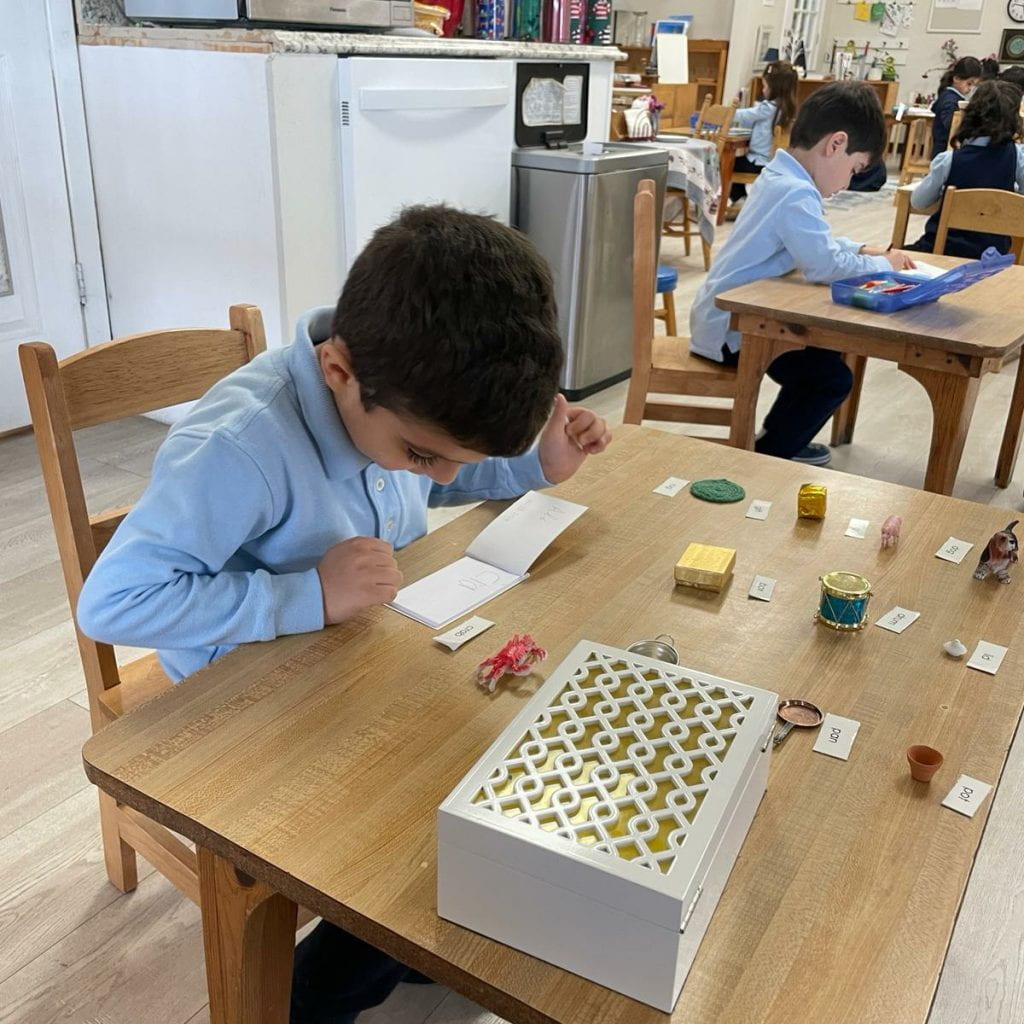
Language: In language, our younger students are mastering sounds like C, B, L, and O, while older students are building words, blending sounds like “th,” “ch,” and “sh,” and practicing handwriting. Handwriting practice includes pencil control with metal insets and tracing shapes to support letter formation.
Practical Life: The children are busy mastering skills like spooning, pouring, polishing, and using dressing frames. They’re learning to care for themselves and their environment—whether it’s dusting shelves or cleaning up after snack and lunch. These exercises build confidence and independence, helping children take ownership of their surroundings.
Geography and Cultural Studies: We’ve begun our North America geography studies as part of our year-long journey across the continents. The kindergarteners have been exploring the places, animals, and flags of North America, and they’re enjoying “pin-pricking” outlines of different countries—a hands-on activity that’s been a big hit!
Pumpkin Exploration: Our botany studies have focused on the lifecycle and parts of a pumpkin. The children enjoyed washing the pumpkins, observing their textures, counting bumps, and checking their weight. We estimated the number of seeds inside, counted them, roasted them, and even shared some pumpkin pie together! The kindergarteners also experimented to see if a pumpkin would sink or float.
In addition to pumpkins, this month we also explored the world of birds! From penguins to peacocks, blue jays, and mourning doves, the children discovered various bird types, their nests, and habitats. Bird riddles made our lessons even more exciting! We also linked this to our Islamic Studies, discussing how Allah provides each creature with exactly what it needs to thrive.
Math: Students have been exploring counting with number rods, practicing addition with the snake game, and even working on the stamp game to deepen their understanding of numbers and place value. It’s wonderful to see their excitement as they develop confidence in counting, addition, and the basics of the decimal system!
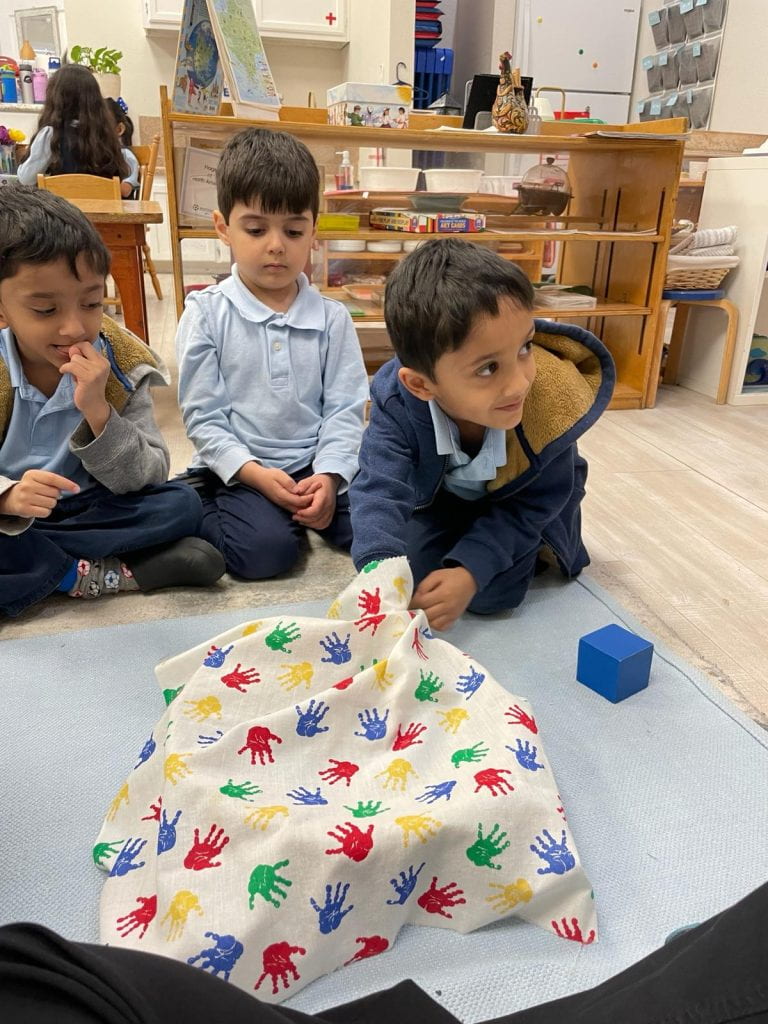
Sensorial: Sensorial materials like the Pink Tower, Broad Stair, Red Rods, Color Tablets, and Knobbed Cylinders are designed to refine children’s senses, helping them observe, compare, and categorize the world around them. These activities engage the senses and establish a foundation for future learning in mathematics and language.
Islamic Studies: This month, we began our chapter on the Ahlul Bayt (A) as part of our Rabi’ Al-Awwal celebrations, focusing on Prophet Muhammad (SAW) and his Family. They’ve been practicing the phrases when you sneezes say, “Alhamdulillah and when someone else sneezes say, “Yarhamukallah” ” to express gratitude and compassion, incorporating these phrases into their daily lives. Please continue practicing this at home to support their learning.
The children also made their own Tasbeeh with glow-in-the-dark beads and have a special homework assignment to recite the Tasbeeh each night before bed.
Our lessons this month have included:
The Kalima in Arabic and English
Allah as Ar-Raaziq (The Provider).
Allah is Everywhere.
The Birth of Prophet Muhammad (SAW).
Picnic: Thank you to all the parents who contributed to the success of our annual picnic! It was a joy to see everyone in a relaxed, fun atmosphere.
Parents’ Lesson Night:
We deeply appreciate everyone who took time from their busy schedules to join us for Parents’ Lesson Night. The children were thrilled to showcase their work.
We’re grateful for your partnership in your child’s education, and we encourage you to schedule a class observation or join us for parent-teacher conferences. Please feel free to reach out if you have questions or concerns about your child’s progress.
As we close this month, we are truly thankful for the blessings of learning and growth that Allah (SWT) has bestowed upon us. We look forward to the months ahead as our students continue to flourish academically, socially, and spiritually.
Dear Wisdom Academy family, Alhamdulillah, another school year has begun! The teachers have written summaries and provided their photographs to give you a glimpse into our wonderful school activities. Please take some time to read and enjoy!
Alhamdulillah! We thank the parents, families, and community for their continuing support and encouragement. If you have any questions, comments, or ideas, we would love to hear from you! Please leave your comments!
Welcome to the 2024-25 school year at Montessori Wisdom Academy! We are excited to embark on this new journey of growth and learning with your children. We hope everyone had a restful and enjoyable summer break.
The beginning of the school year brings with it excitement, new routines, and opportunities to reconnect with old friends and make new ones. Each child adjusts to these changes in their own unique way, and it’s not uncommon to see jitters, anxieties, or even tears as they settle back into the school routine.
Building Independence and Classroom Community
Alhumdulillah! The first month has been filled with joy, new routines, and important transitions. Our younger students have been diligently working on developing independence with self-care tasks like dressing themselves, washing hands, and putting away their belongings—skills that are vital for both cognitive and social development.
The children have been exploring the materials on the shelves, receiving new lessons, and reviewing concepts from the previous year. This has allowed me to assess each child’s interests and development so I can introduce lessons that not only excite them but also help build their confidence and independence.
Meanwhile, our older students have embraced leadership roles by helping their younger peers adjust to the classroom environment. This interaction fosters new friendships and strengthens our sense of community. Lessons on grace and courtesy have also been introduced, teaching the children how to care for their classroom, respect their peers, and ease transitions between activities. A favorite new activity is walking on the line, which helps children move smoothly from one task to another.
Language and Math Development
In language, our younger students are exploring letter sounds using sandpaper letters, chalkboards, and tracing exercises. They are focusing on letters like ‘a’, ‘c’, ‘m’, ‘t’, and ‘s’. Older students are practicing building three- to four-letter words with the moveable alphabet, with a focus on lowercase cursive writing.
In math, younger students are working with sorting, shapes, patterns, and math manipulatives, while older children have started learning the decimal system with the Golden Bead material. They are also practicing skip counting using the long chains of squares and cubes.
Cultural Studies and Geography
We began our geography lessons by exploring the seven continents. The children are in the process of creating their own continent maps, which has sparked their curiosity about the world and different cultures. We also conducted a hands-on landform lesson outside, followed by a fun activity of making paper boats and racing them across the table.
Practical Life and Sensory Lessons
As part of our practical life and sensory activities, we’ve introduced various Montessori materials slowly. Activities like rolling and unrolling rugs, pink tower exercises, fabric matching, wet and dry pouring, and sandpaper globe exploration have engaged the children. They’ve also enjoyed tactile experiences like necklace lacing and refining their color discrimination with color tablets.
Our vegetable unit has also been a hit! Each week, a new fruit or vegetable is introduced to the class. The children learn facts about it, peel it, smell it, and even taste it. We began with corn, where the children eagerly peeled the husk layer by layer, smelled the corn, and then enjoyed tasting it. They also did a fun corn-themed craft afterward.
Islamic Studies: Love of Ahlul Bayt
In Islamic studies, we started the year with lessons from the Kisa Kids curriculum. The children are learning about the oneness of Allah (SWT) through discussions on “Who is Allah?” and the phrase “Laa Ilaaha Illallaah.” We encourage you to reinforce these teachings at home by pointing out Allah’s beautiful creations, such as trees and birds, during walks or daily conversations.
During Muharram and Safar, the children’s hearts were filled with love for Imam Hussain (A.S.). They participated in discussions about the events of Karbala and shared their understanding of the tragedy. We held a school-wide majlis to commemorate Arbaeen, and it was heartwarming to see the children’s pure expression of love for the Ahlul Bayt (A.S.).
We also celebrated the birth of the Holy Prophet Muhammad (SAW) with beautiful performances by the students, which were a reminder of the significance of faith in our daily lives.
Highlights of the Month:
Commemorating Arbaeen with a school-wide majlis.
Celebrating Eid-e-Zahra with our students.
Enjoying lunch outside with elementary students.
Celebrating the birth of the Holy Prophet Muhammad (SAW).
Looking Forward
As the year continues, we look forward to witnessing the academic, social, emotional, and spiritual growth of our students. Thank you for your continued support and involvement in your child’s education.
We pray that this year will be filled with blessings, excitement, and discovery for all of our students. We are truly grateful to Allah (SWT) for the opportunity to enhance our minds and hearts through knowledge and friendship.
Alhumdulillah, we have successfully completed another wonderful year at Wisdom Academy. As we reach the end of 2024, I would like to take a moment to reflect on the incredible journey we’ve shared together. From the very first day of school to our special events and enriching activities, this year has been filled with joy, learning, and growth.
As the academic year comes to a close, we thank Allah (SWT) and Ahlul Bayt (A.S.) for guiding and blessing us through another year. It has been a year brimming with laughter, curiosity, and remarkable growth.
Year at a Glance
Our year began with excitement as the children settled into their new environment, forming friendships and discovering the joy of learning. We celebrated numerous events and engaged in a variety of educational activities that have left lasting impressions on our young minds.
Highlights of the Year
Yuam e Hussain
Mother’s Day & Father’s Day
Maulud al Hujjah
Pumpkin Experiment
Eid Carnival
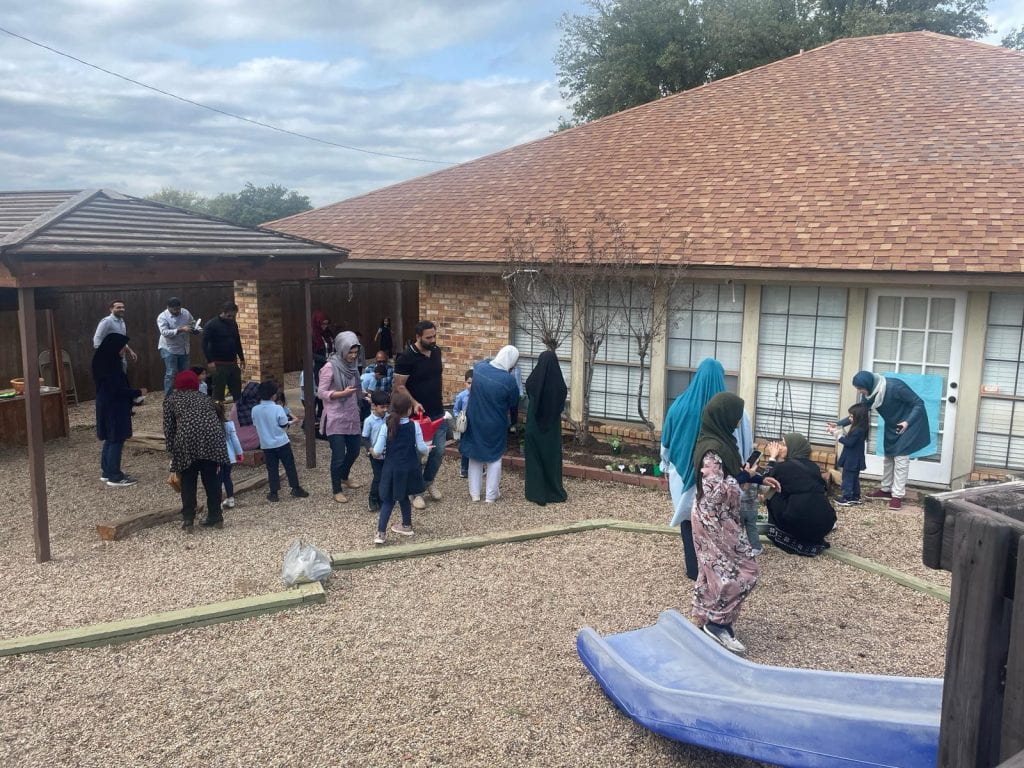
Planting with Parents
Hatching Chicks
Life Cycle of a Butterfly
The children were fascinated by the life cycle of a butterfly. They observed the transformation from caterpillar to chrysalis to butterfly, learning about nature’s wonders firsthand. This hands-on experience was both educational and enchanting, sparking curiosity and a love for nature.
Graduation: The culmination of our year was the graduation ceremony. It was a proud moment for all of us as we celebrated the achievements of our young graduates. As they start their second phase of development, we are excited to see them continue to thrive and succeed.
And Much More…
From art projects to science experiments, story time to outdoor play, every moment at Wisdom Academy has been filled with learning and joy. The children’s enthusiasm and curiosity have been a source of inspiration for all of us.
Year at a Glance Through Pictures
While words can capture the essence of our experiences, pictures tell the story more vividly. We have compiled a collection of photos that highlight these special moments, showcasing the smiles, creativity, and learning that have defined our year.
As we look back on this incredible year, I am filled with gratitude for the support of our parents, the dedication of our supportive staff, and the enthusiasm of our wonderful students. Thank you for being a part of the Wisdom Academy family. We look forward to another year of growth, learning, and joy.
May Allah’s blessing be upon each and every one of you during this break. We look forward to reuniting with you after the summer, as we continue this beautiful journey of learning and discovery together.
Here’s a glimpse into our last 2 months of the 2023-2024 school year!
Quran Studies News
By Mrs. Fadia Ali, Quran Studies Teacher
Alsalamu Alikum Dear Parents, I pray that you and your family are all well and having a great summer break Insha’Allah. Here is a summary of your children’s Qur’an work during April & May, 2024.
Primary: Level One: (4 years old and 5 years old children who joined the Quran program for the first time this year) Children reviewed all previous Surahs and Duaa’s which they learned throughout this year. Level Two: (5 years old children) Children practiced Surah Al Adiyatt العَادِيات and part one of Ayah Al Kursi الكُرسي أيَة. They also reviewed all previous Surahs and Duaa’s which they learned this year. We usually focus in these two primary levels on the correct (Makharyge) مَخارِج and pronunciation of Arabic letters and words, and on memorization of number of small Surahs and Duaa’s the correct way. (All Duaa’s are from the Noble Qur’an)
Elementary: Group One (level two Qur’an): Students continued reading Juza 30th of the Nobel Quran after they finished reading grammars (the Qaida). Group Two (level two Qur’an): Students continued reading the last two Juzas of the Nobel Quran (reading without repetition). They also continued practicing Surah Al Qyamah القِيامة سورة. Group Three (level two Qur’an): Students continued reading Surah Al Baqharah البَقَرة سورة (reading without repetition). They also continued practicing Surah Al Qyamah القِيامة سورة. Our main focus at level two (groups two and three) is on improving student’s recitation of the Noble Quran. Groups Four and Five (level three Qur’an): Students have finished reading Surah Al Baqharah البَقَرة (reading without repetition), while they are still practicing Surah Al Mulk المُلك سورة. Our focus at level 3 (groups four & five) is on reading, on Qur’an vocabulary memorization, and on writing; our goal is to help children learn the most efficient way of Arabic writing, and to help them develop a sense of direction of their Arabic writing (which is opposite of the direction of English writing), and develop a sense of the right size of the Arabic written words.
Middle School: 7th grade: Students reviewed Tajweed rules in more details and applied them while reciting part 1 to 7 of Surah Al Kahf الكَهف سورة (pages 1 to 14 of Surah Al Kahf), they also learned new Hadeeth of the Prophet and Ahlulbaiyt (as) (Hadeeth The best action & Hadeeth Maintenance of Continuous action), and Quran Quest; (Surah Al Adiyatt العَادِيات سورة & Surah Al Fil سورة الفيل). High School: 9th grade: Student learned Chapters 7 of the No nonsense Arabic book (The past and present passive voice verbs). They also finished reciting the Nobel Quran during the month of Ramadan and continued, after the month of Ramadan, their daily recitation of different Surahs while applying all learned Tajweed rules.
Elementary Class News
By Ms. Hind Sabir, Elementary Guide
Salaam Dearest Parents of the Elementary, As the doors of 2023-24 slammed shut as quickly as they flew open, the year began to ramp up rather than settle down these last couple of months. It was a bittersweet realization for much of our children who were saddened by the coming of the end – a true testament to the amazing work and spirit within Wisdom walls, ‘ . ال حمد Ultimately, the children began to take stock and reflect upon the people they want to become and how they want to return from summer. Summer is a great time to relax, travel, have fun, reconnect, and fine tune. Don’t underestimate the power within our children – they are amazing with their 90 billion neurons each! Reading, fiction and especially non-fiction, is always a great summer work that brings adventures and self-construction. While screens can bring the damage of deviations and inactivity evident to the body but more menacing and subversive to the brain. Limiting screen time is critical to a still-forming mind that needs to take a role in executive function when your child can make well-planned decisions that will further them as an individual.
Have a safe, healthy, and blessed summer full of wonders! See you in August!
By Mrs. Malak Charara, Science and Electives Teacher:
In Science, Grade 7 students learned more about plate boundaries and the “Plate Tectonics” theory which explains the science behind how some parts of our Earth’s lithosphere have been moving slowly over millions of years and shaping the continents we know and live on today. After that, we moved on to investigate the formation of another class of rocks known as “Metamorphic rocks” and how all three types of rocks can undergo metamorphism and change to one another in what is known as the “Rock Cycle”. Finally, we studied some geological phenomena such as earthquakes and volcanoes and concluded the semester by researching mesmerizing Geoscenarios that help remind us of Allah (swt)’s divine creation.
In Elective Nutrition, Grade 7 students learned about the essential micronutrients we need to survive, specifically vitamins. Students were introduced to the different categories, names and functions. We touched on some fun facts for selected vitamins as well and researched some disorders related to excess or deficient intake of some of the main vitamins like A, C and D.
In Biology, our Grade 9 student resumed her exploration in the unit of evolution as we tackled topics like evolutionary patterns and processes and finding order in Biodiversity to classify organisms based on various factors. The latter was a foundational lesson to introduce the last unit of study (Unit 6: The Diversity of Life). Each lesson in this unit explored a different group of microbes (viruses, prokaryotes, protists, and fungi), defined the group, the general structure, common reproductive strategies, and the roles of group members in the environment. We discussed real world examples of impacts to human health and how understanding disease-causing organisms helps us control them and prevent future epidemics. Next, we touched on the Plantae and Animalia Kingdoms in the same aspect and concluded the semester by investigating the complex systems and feedback methods that work together to maintain homeostasis in the human body. We learned about the structures and functions of the following systems: digestive, excretory, circulatory, lymphatic, immune, respiratory, nervous, skeletal, muscular, endocrine, and male and female reproductive systems.
As we come to an end to this fruitful academic year Alhamdulillah, I would like to thank our students and you as parents for all the time and effort you’ve put towards success and progress! Here are some photos from April and May 2024!
Grade 7 students presenting their three different Geoscenarios: Yellowstone Hotspots (by Alizar), Glaciers (by Sara) and Oil (by Mariam) as a final project to summarize and apply the Earth History lessons and concepts they’ve been investigating this semester:
Our Grade 7 students chopping some Fattoush vegetables for a taste test!
Grade 7 student preparing and decorating some dark chocolate covered strawberries as a healthy treat:
Grade 7 students sharing their presentations on vitamin D deficiency disorders in children and adolescence, their symptoms, and ways to include more vitamin D rich food into their daily intake to prevent such disorders:
Grade 7 students sharing their presentations on “Kwashiorkor” a protein deficiency disorder, it’s symptoms and how to include more protein in their diets to meet the Recommended Daily Allowance (RDA) and prevent establishing this disorder:
Our Grade 9 student enjoying some break time with the elementary chicks!
Our Upper School students enjoyed celebrating Eid A-Fitr with their annual “Secret Eid” tradition, Alhamdulillah — there were lots of gifts and joyful moments with their peers and teachers:
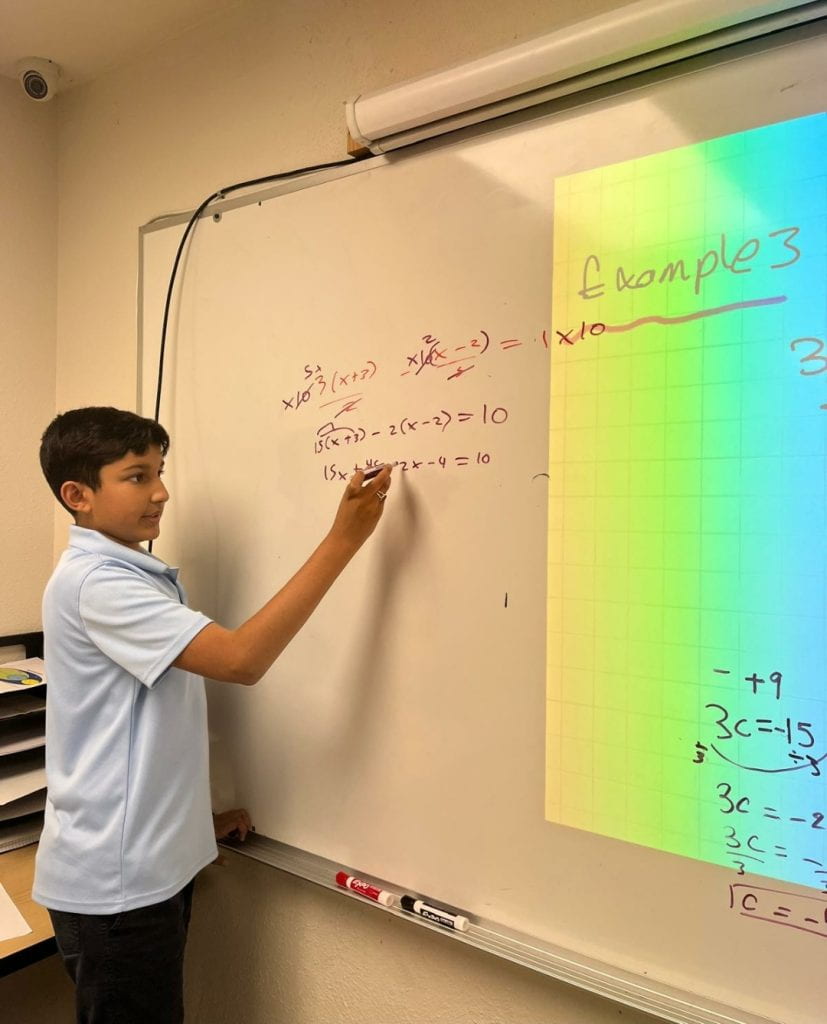
In Mathematics, grade 7 students were provided an overview of data-collection methods, and the process of organizing and presenting data, they learned how to draw and analyze dot plots of a data set. They built on their previous understanding of the mean and median as measures of center, to learn about the mean absolute deviation (MAD) as measure of variability for numerical data. They used this knowledge to implement a survey in elementary class about the number of sports liked by each student, displayed the data set on a dot plot, analyzed and understood the results. Furthermore, 7 graders started establishing a knowledge in probability by first understanding sets and sample spaces and their notations. They investigated probabilities of compound events and found these probabilities using possibility diagrams and tree diagrams. They learned about mutually exclusive events, independent events, and dependent events and the difference in finding their probabilities.
In Geometry, grade 9 students began with an examination of arc length, sector area, and segment area, and an introduction to radians as a unit of angle measure. Students then examined properties of tangents, chords, inscribed angles, and segments lengths. They then moved on to studying cross sections, and determining the 3D figure formed by rotating a 2D figure, and applied the volume formulas for prisms, cylinders, pyramids, cones, and spheres to solve problems. Finally they extended their previous knowledge of ratios and basic probability to the probability of multiple events, combinatorics, probability distributions, expected value, and used them to make decisions.
Grade 7 students presenting the data analysis of the survey they made in elementary class.
Grade 7 students trying to understand why the sum of seven when rolling two dice is the most probable outcome, using a possibility diagram and probability calculation.Grade 9 student proving the relationship between the volume of a cone and a cylinder of the same heights , and a pyramid and a triangular prism of the same heights in a class activity.
By Br. Yusuf Ali, English, History, and Social Studies Teacher:
9th Grade Social Studies completed research into the WWI Occupation of Palestine. 7th Grade Social Studies ended the Unit on the European Renaissance. English Studies included preparation for the SAT 10 Exam.
Inshaa’Allah
Alhamdulillah! We thank the parents, families, and community for their continuing support and encouragement. If you have any questions, comments, or ideas, we would love to hear from you! Please leave your comments!
Dearest Primary Parents, As Salaam Alaykum, Warm greetings and Ramadan Mubarak to you and your loved ones! We’re truly grateful to Allah (swt) for blessing us with the opportunity to experience this sacred month together. May it be filled with blessings and growth for all of us, Inshallah! As we await the arrival of warmer weather and the blossoming of spring, our children are experiencing their own growth and learning journey. Spring provides a perfect opportunity to explore patterns and cycles, from the changing seasons to the life cycle of creatures like the monarch butterfly. Understanding patterns is essential in various subjects, including math, science, and Islamic studies and allows our children to connect with the rhythms of nature and the world around them. We’ve observed our younger children drawing inspiration from their older peers, particularly in their enthusiasm for learning and exploring new materials. This interaction not only fosters curiosity but also allows the older children to take on leadership roles, such as presenting works to their younger friends. These experiences not only build confidence but also promote mastery of materials and concepts. While academic growth remains important, we place equal emphasis on kindness and respect through daily lessons on grace and courtesy. Our aim is to nurture not only academic excellence but also the development of compassionate and respectful individuals. Throughout March, our exploration extended to various exciting topics, including Planets, Animal Classifications, the Life Cycle of Plants, Phases of the Moon, and the significance of Ramadan and Fasting. Recently, our children have been immersed in the fascinating world of puzzle maps, a fun activity that helps them understand how continents and countries fit together. By tracing the shapes of each country, they’re not only improving their pencil skills but also preparing for handwriting practice. Alongside this, they’re learning about different cultures from around the world, exploring everything from traditional clothing and housing to currency and food. It’s amazing to see how naturally they absorb the diversity of our world at such a young age. Elementary Class Visit for Kindergarten Students: After spring break, our kindergartners had the exciting opportunity to spend a morning in the Elementary classroom. They were thrilled to explore this new environment, guided by their older friends who eagerly showed them around. The experience was truly inspiring, fostering a sense of pride and belonging among our youngest learners as they observed the welcoming and supportive atmosphere in the classroom. Islamic Studies: In our Islamic Studies, the blessed month of Ramadan provided invaluable opportunities for spiritual growth. We introduced the recitation of Surah Qadr along with Dua Marafah, during our morning group sessions. Additionally, we made a point to send salaams to our beloved 12th Imam, fostering a sense of connection and respect. “The twelfth Imam is Mahdi, We’re waiting for him eagerly! He spends his life guiding to Islam, Assalamu Alayka Ya Imam”! Incorporating lessons from “THE GUIDING LIGHT Book 4” by Kisa Kids, these included the significance of greeting others with salaam, the importance of practicing proper etiquette in the masjid, and the value of extending invitations. As part of our learning, students decorated invitations for our annual Iftar, a cherished tradition that celebrates unity and togetherness with our families. Throughout the month, our studies included: Exploring the phases of the moon Reflecting on the profound significance of Ramadan Delving into the lives of esteemed figures like Imam Ali (A.S), Imam Hasan (A.S), and Hadrat Khadijah al Kubra (A) Reflecting on the significance of Laylat-ul-Qadr These lessons not only enriched our understanding of Islamic principles but also deepened our spiritual connection during this blessed month.
As we approach the end of the school year, we encourage parents to ensure their children attend school regularly, as even a few minutes can make a difference in their learning journey. Your support and communication are invaluable in nurturing our children’s growth and development. Thank you for being such wonderful partners in this journey of education and growth. Warm regards,
Mrs. Mamdani AMI Primary Guide
March 2024 PHOTO GALLERY
Planting Day PreparationsPlanting DayTaking Care of our PlantsStory TimeUPPER SCHOOL DEMONSTRATIONAnnual School Iftar Above 5 photos: Language Above 5 photos: Math Sensorial Above 4 photos: Geography and Science
Dear Primary Parents, As-salaamu Alikum, Congratulations to everyone on the blessed month of Shaban and the Birth Anniversary of the Imam of our time (AJTF). May Allah bless you and your families. February has been an eventful and enriching month filled with growth, exploration, and celebrations. We marked special occasions such as the birthday of Imam ʿAlī and Father’s Day. Our students enjoyed engaging in activities such as decorating for their dads and participating in themed projects to honor these significant events. Additionally, we organized a special Breakfast with Fathers in honor of the birthday of Imam Ali (A).
Playing and Winning KAHOOT! on Father’s Day
HAPPY FATHER’S DAY TO OUR DADS
In this blog post, I want highlight one of the important and foundation of Montessori primary curriculum.
Exploring Practical Life: The Heart of Montessori Education: In a Montessori classroom, Practical Life activities are at the core of a child’s development. They encompass caring for oneself and the environment through purposeful tasks like pouring water or washing a table. These activities not only refine fine motor skills but also nurture concentration and a sense of responsibility within the community.
Why Children Love Practical Life Work: You may have heard the saying, “Play is work, and work is play.” As adults, we view work in a negative light because it entails the chores we have to do for a certain outcome. So, “play,” to us is anything separate from work. The young child does not view these activities through that same lens, though. They are working to understand what things are and how things work, and so they are naturally drawn to real-life work for the sake of process.
Children experience the same joy when they are washing the dishes as when they are building with Legos. Practical Life activities ensure that children are not restricted in their capacity to learn through real experiences, and instead, ensures this drive is supported.
The Benefits of Practical Life Activities: Bonding with the Classroom Environment: Spending time on Practical Life activities helps children connect with the classroom and feel relaxed. Developing Hand Strength and Coordination: Practical Life hones the development of the hand. Montessori said, “The skill of man’s hands is bound up with the development of the mind.” When children train their hands, they train their minds, and materials in Practical Life are meant to sharpen fine motor coordination while fostering an awareness of surroundings. All this work assists in increased functionality in the home as well.
Preparing for Academic Success: Practical Life activities actively nurture executive functioning skills, crucial for both academic and life success. Through activities like washing dishes or waiting for a peer to finish before taking turns, children learn emotional control, inhibition, working memory, and flexibility. These skills lay a strong foundation for future academic activities and overall success in life.
Thus, the Practical Life area in Montessori education serves as a vital bridge between academic learning and real-world application. By engaging in purposeful activities that promote independence, responsibility, and essential life skills, children not only thrive academically but also develop into well-rounded individuals capable of navigating the complexities of life with confidence and competence.
Islamic Studies: We delved into the Ahl al-Bayt (A.S), focusing particularly on Imam Ḥusayn (A.S), commemorating his significance on the 3rd of Shaban as the last of the first five members of the Ahl al-Bayt (A.S). Fostering Love for Salah: At this tender age, our aim is to instill a love for Allah in young hearts, laying a strong foundation for their relationship with Him. By nurturing this love, children naturally develop an inclination towards Salah, finding joy in prayer. We encourage parents to create a spiritual environment at home by inviting their children to join them in Salah, even if it’s just for a part of the prayer. Additionally, gifting special Salah items can further ignite their love for prayer. Lessons in Manners: Throughout our sessions, we also covered essential manners for children, including family manners, friendship manners, manners at the masjid, and at school. Students learned about the importance of being kind and respectful, particularly towards their parents. Recommended Reading: To complement our lessons, we recommended engaging books from Kisa Kids, such as “Imam Hussain’s (A.S) New Friend,” “Animals in the Quran,” and the “Hakima and Hadi” series, which provide valuable insights into Islamic teachings in an accessible manner.
Our week-long Celebration of Imam Mahdi (AJTF): Serving Ice Cream, Popcorn, and Pizza to othersStory Time with Sh. Kazim Khoja and Sh. Saadi
The 15th of Shaban is a very special day in the Islamic year. It is the Wilādah of the 12th Imām, Imām Muhammad al-Mahdi (AJTF)
We marked the birth of the Imam of our time (AJTF) with a week-long celebration filled with special treats each day and rehearsals for a special presentation. The excitement and confidence demonstrated by our students during their performances were truly inspiring. We extend our gratitude to all the parents and volunteers whose support contributed to the success of this program.
Dearest Parents, Salāmun ʿAlaykum, May Allah bless you and your families.
Congratulations to you and your loved ones on the Auspicious occasion of the birthday of our beloved Sayyeda Fatima (SA), Imam Ali (A.S) and the month of Rajab.
May Allah (SWT) and the 14 Ma’soomeen shower their blessings upon us.
Starting the New Year with The Lady of Light, Sayyeda Fatima’s (S.A), birthday celebration is a beautiful blessing. We also took time to honor our mothers on this day. Our students did an amazing job at our Mother’s Day Program! Their singing really lifted our spirits. On Mother’s Day, the children enjoyed having breakfast with their moms and giving them special gifts, which they crafted with love.
Elementary students helping prepare the Primary classroom for Mother’s Day
Mother’s Day Celebration
As we think back on the past year, it’s incredible how quickly time has passed. When the children returned to school after their break, they brought with them a lot of excitement, making our learning space feel fresh and inspiring again. It was so nice to see everyone and hear about all the fun they had during Winter Break. The students were eager to get back to their schoolwork and easily got back into their usual routines. It seems like the break was exactly what they needed to rest their minds and look forward to spending more time with their friends and teachers.
In the Montessori environment, repetition plays a crucial role in every stage of a child’s development. It acts as a guiding force, leading children towards mastering specific materials and areas of learning. By engaging in repeated activities, children strengthen connections in their brains, which ultimately makes learning easier for them.
Above Photos: Sensorial Activities
Repetition takes various forms, such as following a daily routine. For many children, having a routine is beneficial as it helps them concentrate and learn effectively. It also aids in developing self-discipline and focus, ultimately empowering them to complete tasks independently. This independence fosters feelings of confidence and security in the child, contributing to their overall sense of well-being.
Above Photos: Practical Life
Geography/ Cultural
We’ve been exploring how animals survive in cold weather. We’ve learned about their different strategies, like hibernating, migrating, or adapting. Through books and discussions, we’ve delved into the Polar Regions, discovering fascinating facts about polar bears and penguins. We’ve also learned about the habitats of these animals and their unique characteristics, enriching our vocabulary and understanding of science.
In Geography, we’ve been fascinated by land and water forms. Using our land form trays, children have been pouring water to understand how different bodies of water are formed, such as islands, peninsulas, lakes, gulfs, and straits. We’ve also been using miniature animals to make connections between these landforms and where certain animals live. This hands-on exploration extends to larger maps, where children can locate and identify similar land and water features. They can then choose to trace, cut out, or paint these forms, further enhancing their understanding of geography.
Learning Land Forms
Language:
Children are beginning to write their own words, marking an important step in their individual development as writers. We’re guiding them in understanding the proper use of upper and lower-case letters, as well as the placement and spacing of words in a sentence. Students are really trying hard to remember capitalizing the first letter in a sentence, ending a sentence with a period, and remembering to use spaces between words. We have started to write 2 sentences when writing in our journals. It is amazing to see their growth!
The younger children continue to work with beginning sounds and making books, while others have begun word building with short vowels. Some of the older children have started word building using phonograms.
Reading is critical! Please read with your child every day. Whether your child is reading to you or you are reading to them, this daily practice at home is an important boost to a student’s decoding, fluency, and comprehension skills.
Math:
Many of our students are excelling in math, and it’s a joy to witness their progress.
With our younger ones, we’ve been using a variety of visual materials like beads, bears, ladybugs, number rods, and other sensory tools to make learning math engaging. One activity we’ve been enjoying is going on “number hunts,” where we count different objects and match them to corresponding sandpaper numbers. This helps children understand one-to-one correspondence and recognize numbers better.
We’ve also introduced the decimal system to our older students. They’ve learned the names of each category and the quantities associated with them.
Additionally, our older students have been working on addition, subtraction, or multiplication booklets. The aim is to memorize facts through repetition and hands-on experience with materials. They even create their own math books using strip boards to reinforce their understanding of these concepts.
Islamic Studies:
We continued our unit on the Ahl al-Bayt (A). We talked about Imām Alī (A), the second of the first five members of the Ahl al-Bayt (A). Kindergarteners worked on a craft of The Kaaba, the birthplace of Imam Ali (a.s.), and learned the importance of Kaaba, what is Qibla?, and Names of Salaat.
All the students are also memorizing the names of 12 Imams, and Salawat.
To emphasize what was learned in school, please try to do the following:
Talk to your child about Imām Alī (A) and how he was kind to everyone, especially children! Mention how he took care of all the orphans.
Story Time:
Every Wednesday morning, our Primary students have the privilege of spending time with our very own Sheikh Saadi. Last Wednesday, we had the honor of hosting Ustadhah Fatemah Meghji, who generously shared her time from her busy schedule to spend with our primary students and read a story about “Rahmah the Raindrop.”
Housekeeping:
Winter is in full swing; we do try and go outside whenever we can in winter. Please be sure to send your child prepared for outdoor play, and label all their belongings.
For your child’s well-being, we encourage packing a healthy lunch in their lunch box as deep-fried items or Nutella sandwiches are not considered healthy options.
We kindly ask that you refrain from feeding your child donuts, cupcakes, or candies, in the morning for breakfast. Feeding sugary items to younger ones in the morning is discouraged for several reasons:
Energy Levels:
Sugary foods can cause a spike in energy followed by a crash, leading to shifting energy levels throughout the day. This can affect a child’s ability to focus and engage in learning activities.
Behavioral Issues:
Consumption of sugary foods has been linked to hyperactivity and inattentiveness in children, which can disrupt classroom dynamics and hinder learning.
Dear Primary Parents, Salaam Alaykum, May Allah (swt) bless you and your families. Our sincerest condolences to the Imām of our time, Imām Mahdi (ʿAJTF), on the commemoration of Sayyidah Fatimah’s Shahadah. November and December brought a whirlwind of activities, from classroom observations to Parent Education sessions and conferences. We appreciate your attendance at the conferences; it was a joy to connect with each of you. It was delightful to engage in conversations with everyone. Our youngest learners are making strides in navigating their once unfamiliar environment. Parents can play a pivotal role in fostering their independence by allowing them to tackle challenging tasks with patience and encouragement. Witnessing a child take pride in walking to school, managing their backpack, and changing shoes solo is a heartwarming moment indeed.
Inside the classroom, the children have been actively engaged in various activities. It’s important to note that many materials do not have a final product to bring home. Children are often in a stage of repeating concrete experiences to master materials before progressing to new ones. This stage is known as the Sensitive Periods, where a child easily absorbs information in specific ways.
Sensorial: Sensorial activities have been a highlight, with children exploring colors, shapes, textures, and sounds. Geography studies took us on a journey of sorting objects into categories such as land, air, and water, and even magnetic and non-magnetic items. We delved into the introduction of continents, with pin-pricking activities becoming a favorite in geography lessons. In addition, we are also learning about weather of different continents and also explored how animals, people and plants prepare for the winter.
Practical Life Activities: Lessons continue to be of utmost importance, instilling discipline, confidence, and inner peace in our young learners.
Language Activities: Language development is in full swing, with preschoolers mastering letter identification, sounds, and number recognition. Younger ones are practicing their sounds and writing cursive letter and also practice writing their name. If you are practicing name writing at home, please have the first letter of your child’s name capitalized & the rest lowercase. On the phonetic sounds, we extended linguistic boundary to word formations and reading sentences. We regularly worked with phonetic blending sounds, Guided reading, handwriting on a lined paper or unlined chalkboard, tracing lines with a finger or pencil, sandpaper letters, and even handgrip with metal insets. These activities are timed to build fluency and automaticity.
Mathematics: Our younger learners are embracing numbers through engaging activities with sandpaper numbers. While, the older children are delving into advanced math concepts, with kindergarteners exploring addition and subtraction and multiplication. The goal is to gain memorization of facts through repetition and hand on experience with the materials.
Islamic Studies: Islamic Studies have covered topics such as Allah sending the Qurʾān, the importance of wilāyah through the example of Sayyidah Fāṭimah, and lessons on Prophet Nūḥ. Fiqh lessons included discussions on cleanliness and najaasah/tahaarah. It is crucial to instill the love of the Ahl al-Bayt (ʿa) in the hearts of our young children. Each story shared aims to create and strengthen their love for these great personalities, inspiring them to choose them as their role models. Primary students attended a gathering in the Elementary classroom where the Elementary students organized an event to mark the anniversary of the martyrdom of Lady Fatimah al-Zahra’ (ع). The session commenced with a recitation of the Holy Qur’an, followed by poetry, a timeline outlining Lady Fatimah’s (ع) life, a theatrical presentation, and a heartfelt elegy in her honor.
Special Thanks: Primary students had the privilege of enjoying story time with the esteemed Sheikh Amin Rastani and Sayed Jawad Al Wahedi.
We express our sincere gratitude to Sheikh Amin Rastani and Sayed Jawad Al Wahedi for graciously taking time out of their busy schedules to spend with our Primary children. Their presence is deeply appreciated, and we look forward to welcoming them more often.
The conclusion of the semester was marked by dedicating our morning to the children of Palestine. We gathered in the Elementary classroom for a session offering Fatiha and words from our esteemed Sheikh Al-Saadi. Later in the day, we enjoyed a delightful lunch featuring pizza and juice.
A sincere thank you extends to all parents for their continued support.
Wishing you a safe and refreshing winter break. We look forward to the exciting journey that lies ahead in the new year! Inshallah.
The month of October is considered a “spooky” one, but not for our class– it was beautiful instead! As we are moving forward, nothing could describe the beauty of seeing children growing everyday. They may seem the same everyday but, surely they grow everyday as well! They may have started putting on their own shoes, which is a great accomplishment! You may notice them putting on their own jackets, which may not seem like much, but to the child it is a great achievement! It makes me joyful when I hear “look teacher, I did it myself!”
We are still practicing our Practical Life lessons, but we have also started doing a lot of Sensorial lessons. Many of our parents may be new to the Montessori method, and may not be aware of all these areas in a Montessori classroom such as Practical Life and Sensorial. Parents may ask: What is this? Why is it important for my child?
To explain, Sensorial activities play a crucial role in the development of the whole child. Children learn to perceive, interact, and experience the world around them and get prepared for success in higher education, life, and well-being. A Montessori classroom is designed meticulously to emphasize all five senses to introduce and develop everything that can be perceived. It helps prepare the children’s mathematical minds and encourages early language skills. Sensory activities introduce complex, abstract concepts to children tangibly and experientially. So, this approach sets the base for all future academic pursuits and provides an incredible educational experience. It is a learning that children will carry through their lives. The sooner children are exposed to different sensory activities, the better they will observe, understand, and process the information. The best example of this is when we start doing a knob cylinder with one block but gradually we add blocks and reach to the point where we do all four together.
While we are busy doing a lot of activities we also try to incorporate Islamic Studies in our daily routine. As you know we start our day with “Dua-e- Marifat” and now all our friends have started reading along. We are now learning names of our Imams and about our Holy Prophet (s.a.w.w). As we celebrated the most auspicious day of his birth. Last but not least, we had a visit from the Fire Department and our friends were able to see the fire truck in person and were able to get inside the truck– how interesting!
With this we will wrap and come back next month with more news next month, inshaAllah.